
AI search is no longer a side conversation in SEO.
Your customers aren’t only searching Google anymore. They’re asking ChatGPT, Perplexity, Gemini, Claude, Copilot, Grok, Google AI Overviews, and Google AI Mode for recommendations, comparisons, buying advice, and vendor shortlists.
That creates a new problem:
You can’t improve what you can’t see.
Traditional rank trackers show where you rank in classic search results. But AI search visibility tools show whether your brand is mentioned, cited, recommended, or ignored inside AI-generated answers.
That’s why this category has exploded.
The problem is that most tools sound similar on the surface. They all claim to track AI visibility. They all mention ChatGPT and Perplexity. They all promise insights.
But they’re not all built for the same user.
Some are better for agencies. Some are better for enterprise brands. Some are affordable starter tools. Some are traditional SEO platforms that added AI visibility features. Others are workflow platforms that help teams act on the data.
So instead of pretending there’s one universal “best” AI search visibility tool, this guide ranks the best tools by use case.
Disclosure
Rankability is our platform, so we’re obviously closest to it. We included it because it directly competes in this category, but we evaluated the tools using the same criteria: AI platform coverage, pricing, agency fit, reporting, citation analysis, workflow depth, and actionability.
Pricing note
Pricing changes fast in this category. The prices below were checked in May 2026 and should be treated as directional. Always verify current pricing before you buy.
Best AI Search Visibility Tools by Use Case
| Category | Best Tool |
|---|---|
| Best overall for agencies | Rankability |
| Best specialist AI search analytics platform | Peec AI |
| Best low-cost AI visibility tracker | LLMrefs |
| Best enterprise AI visibility platform | Profound |
| Best enterprise AI optimization infrastructure | Scrunch AI |
| Best mid-market GEO platform | AthenaHQ |
| Best budget-friendly starter tracker | Otterly AI |
| Best AI Overviews-focused tracker | ZipTie |
| Best traditional SEO suite with AI visibility | Ahrefs Brand Radar |
| Best Semrush-based AI visibility option | Semrush AI Visibility Toolkit |
| Best AI search workflow platform | AirOps |
Quick Comparison Table
| Rank | Tool | Best For | Starting Price | Funding / Status |
|---|---|---|---|---|
| 1 | Rankability | Agencies that need SEO and AI visibility workflows | From $99/mo | Bootstrapped |
| 2 | Peec AI | Specialist AI search analytics | Verify current pricing | $29M reported funding |
| 3 | LLMrefs | Affordable AI visibility tracking | From $79/mo | Bootstrapped / private |
| 4 | Profound | Enterprise AI search intelligence | From $499/mo historically, enterprise/custom | $96M Series C announced |
| 5 | Scrunch AI | Enterprise AI optimization infrastructure | From around $300/mo historically | $19M reported funding |
| 6 | AthenaHQ | Mid-market GEO and AI search tracking | From around $295/mo | Around $2.2M reported funding |
| 7 | Otterly AI | Budget AI search monitoring | From $29/mo | Private |
| 8 | ZipTie | AI Overviews, ChatGPT, and Perplexity tracking | From $69/mo | Private |
| 9 | Writesonic GEO | Content teams using Writesonic | From $79/mo | Private |
| 10 | SE Ranking AI Search | SE Ranking users | Plan or add-on dependent | Private |
| 11 | Surfer AI Tracker | Surfer users | Verify current pricing | Private |
| 12 | Nightwatch LLM Tracking | Rank tracking plus AI search monitoring | From around $32/mo | Private |
| 13 | Keyword.com AI Tracker | Lightweight AI tracking add-on | Reported from around $24.50/mo | Private |
| 14 | Geneo AI | Simple GEO monitoring | From around $39.90/mo | Private |
| 15 | Knowatoa AI | Brand visibility monitoring | Verify current pricing | Private |
| 16 | Am I On AI | AI visibility audits and consulting-style support | Public offer currently appears higher-ticket | Private |
| 17 | Hall AI | GEO tracking and answer insights | Free/Lite plus paid plans | $2M pre-seed reported |
| 18 | Ahrefs Brand Radar | SEO teams already using Ahrefs | From around $398/mo for selected platforms | Bootstrapped |
| 19 | Semrush AI Visibility Toolkit | Semrush users and agencies | $99/mo per domain | Public company |
| 20 | seoClarity ArcAI | Enterprise SEO teams | Custom enterprise pricing | Private |
| 21 | AirOps | AI search content workflows | Free/entry options plus custom plans | $40M Series B announced |
| 22 | Rankscale AI | Low-cost AI search monitoring | From around €20/mo | Private |
How We Ranked These Tools
AI search visibility tracking is still a young category, so rankings based only on features can be misleading.
The best tool depends on what you’re trying to do.
We prioritized five criteria:
-
Platform coverage: Does the tool track the AI platforms that matter, such as ChatGPT, Perplexity, Gemini, Google AI Overviews, Google AI Mode, Claude, Copilot, and Grok?
-
Citation and source tracking: Does it show where AI answers are pulling information from, or does it only show whether a brand was mentioned?
-
Repeatability and trend tracking: Does it help you monitor changes over time, or is it mostly a one-time snapshot?
-
Actionability: Does the tool help you close visibility gaps, or does it only show reports?
-
Agency and team fit: Does it support multiple clients, reporting, workflows, collaboration, and scalable execution?
The biggest mistake is choosing a tool only because it shows a visibility score. AI search results are volatile. Mentions, citations, and recommendations can change across platforms, prompts, locations, and time.
The best tools don’t just tell you whether you appeared once. They help you understand where you’re visible, where competitors are winning, what sources AI engines are using, and what actions can improve your odds of being mentioned or cited.
1. Rankability
Best for agencies that need SEO and AI visibility in one workflow
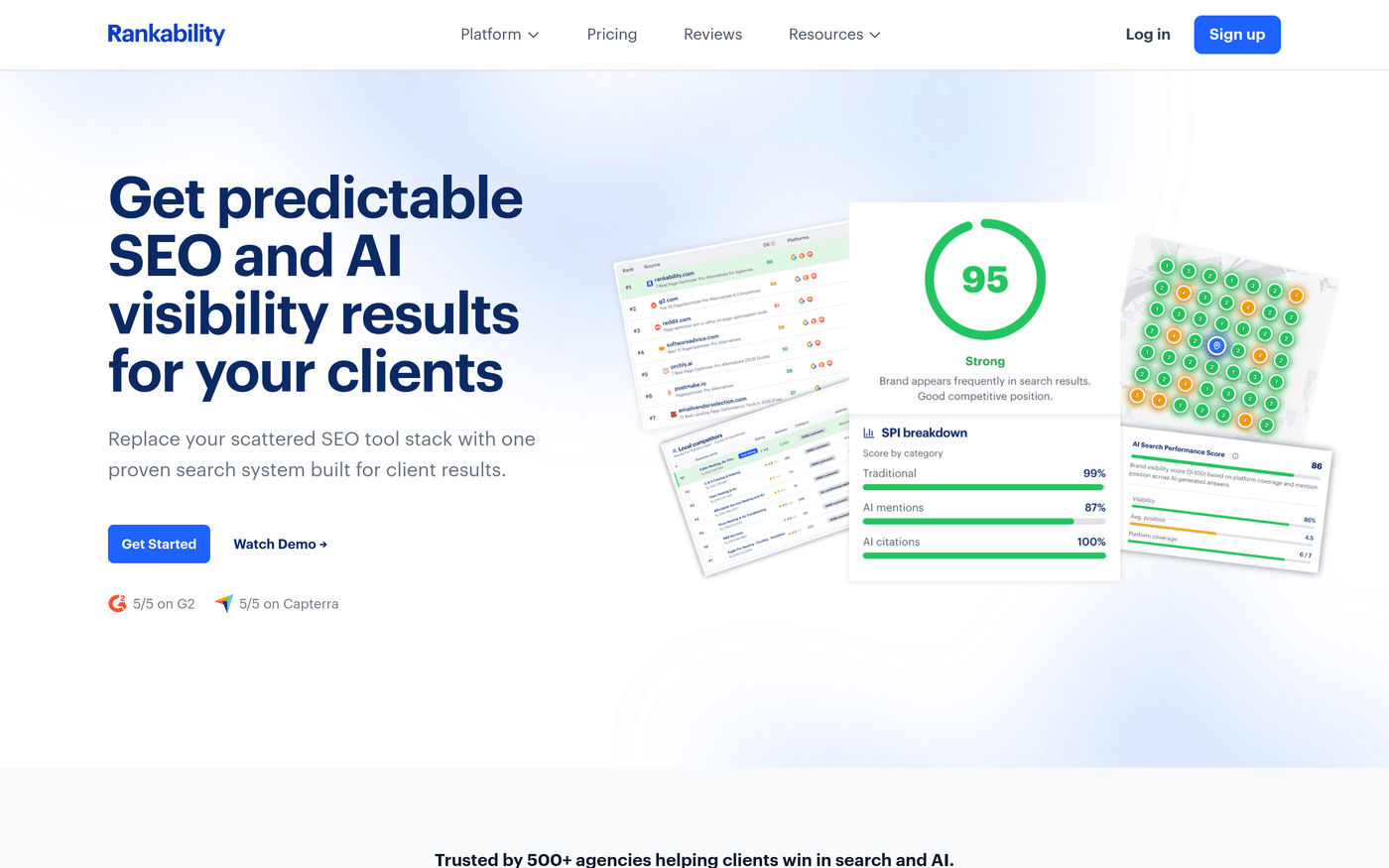
Rankability is built for agencies that need to track, diagnose, and improve client visibility across traditional SEO and AI search.
Most AI visibility tools stop at monitoring. They show whether a brand appears in ChatGPT, Perplexity, Google AI Overviews, or other AI search surfaces. That’s useful, but it doesn’t solve the bigger agency problem:
What do we do next?
Rankability is designed around the full workflow: tracking visibility, diagnosing gaps, researching opportunities, creating better content, auditing pages and brands, and turning insights into action.
That makes it a strong fit for agencies that don’t want another disconnected dashboard. If your team is responsible for client results, you need more than screenshots and visibility scores. You need a system that helps you improve those scores.
Key capabilities
- Track AI search visibility across important AI answer engines
- Monitor traditional search performance and AI search performance together
- Analyze prompts, citations, competitors, and client visibility gaps
- Use Serena, Researcher, Copywriter, Auditor, and Tracker inside one platform
- Create client-ready reporting and workflows
- Support multiple clients, seats, and agency use cases
- Access training, coaching, community, and white-label reporting
Pricing
Rankability currently starts at $99/month for Starter, with Growth at $199/month and Scale at $399/month. Every plan includes the full platform, unlimited clients, and unlimited users — they differ only by monthly credits.
Best for
Rankability is best for SEO agencies, digital marketing agencies, freelancers, and consultants who want AI visibility tracking tied directly to SEO execution.
Watch outs
If you only want a cheap one-off AI visibility check, Rankability may be more than you need. It’s better suited for teams that want to monitor visibility and act on the data.
2. Peec AI
Best specialist AI search analytics platform
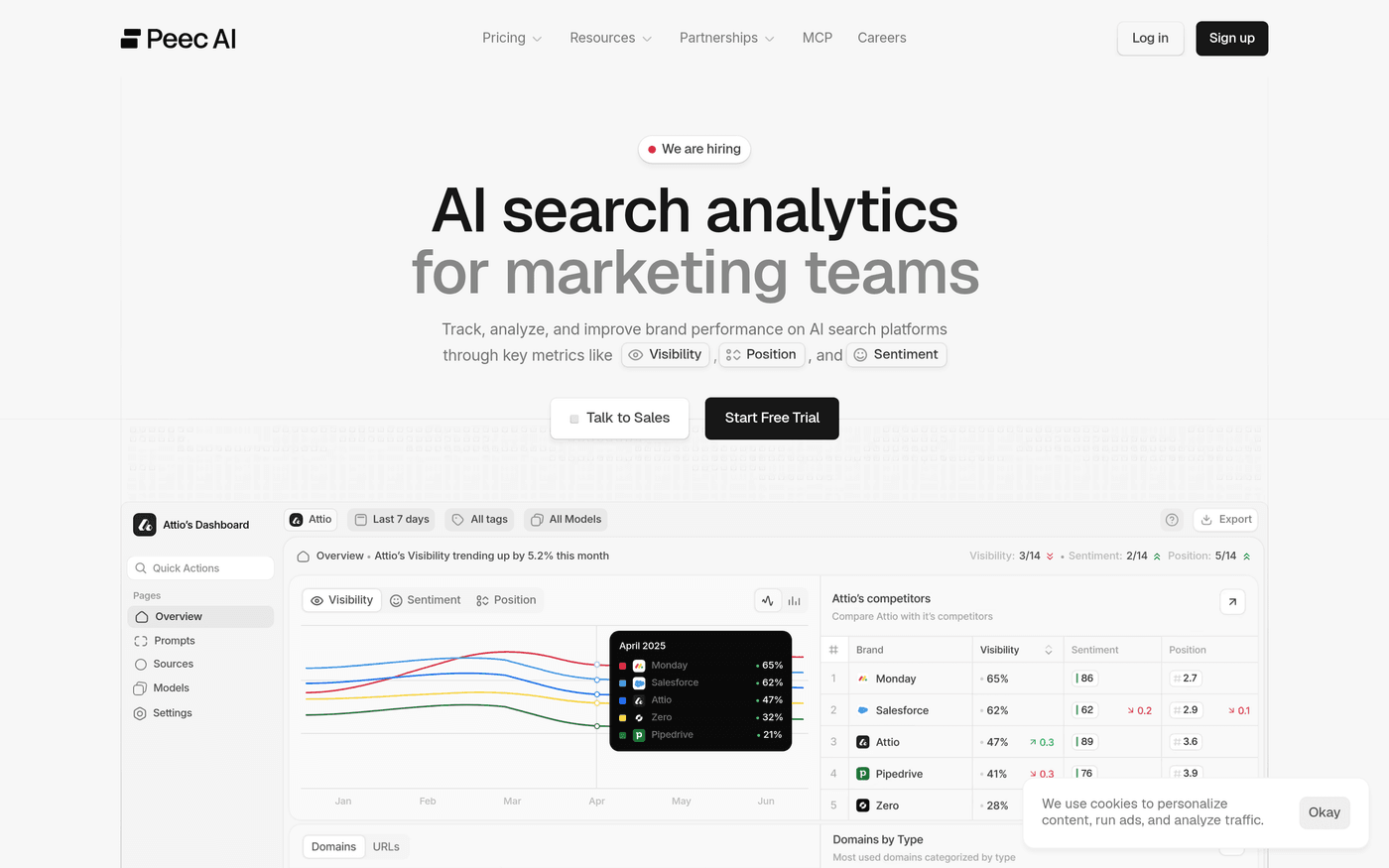
Peec AI is one of the strongest specialist platforms in the AI search visibility category.
It’s built specifically for tracking how brands appear across AI answer engines, including platforms like ChatGPT, Perplexity, Gemini, and other AI discovery surfaces.
Peec has also become one of the better-funded companies in the category, which matters because AI search tracking requires ongoing investment in data collection, platform coverage, infrastructure, and reporting.
Key capabilities
- AI search visibility tracking
- Brand monitoring across AI platforms
- Competitor benchmarking
- Citation and source analysis
- Share-of-voice reporting
- Prompt and topic tracking
- Agency and marketing team workflows
Pricing
Peec’s current pricing should be verified directly because plans and packaging have changed as the platform has grown.
Best for
Peec is best for marketing teams and agencies that want a dedicated AI search analytics platform without needing a broader SEO content optimization suite.
Watch outs
Specialist tools can be strong for monitoring, but you’ll still need a separate process for execution. Make sure your team knows how it’ll turn Peec’s insights into content updates, digital PR, source inclusion, and client reporting.
Read more: Our full Peec AI review
3. LLMrefs
Best low-cost AI visibility tracker
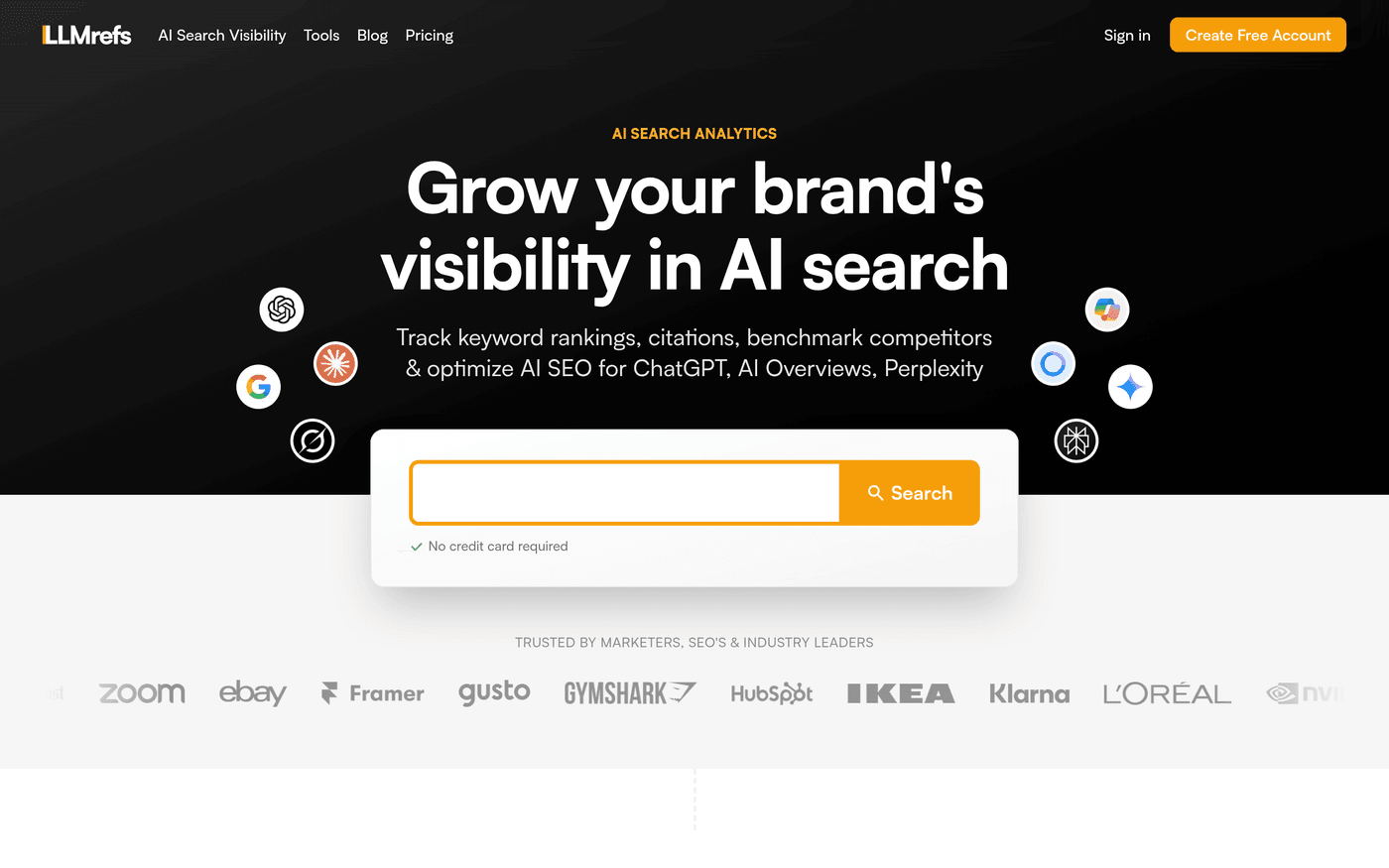
LLMrefs is one of the more affordable AI visibility tracking tools and a good option for solo marketers, startups, and small teams that want to understand whether they’re showing up in AI-generated answers.
It focuses on AI keyword tracking, LLM visibility, competitor comparisons, and practical recommendations for improving discoverability.
Key capabilities
- AI keyword tracking
- Visibility monitoring across LLM search surfaces
- Competitor benchmarking
- Trend reports
- LLMrefs Score
- Practical optimization suggestions
Pricing
LLMrefs has recently been listed from around $79/month.
Best for
LLMrefs is best for smaller teams that want an affordable entry point into AI search visibility tracking.
Watch outs
Lower-cost tools can be valuable, but make sure you understand the limits around refresh frequency, tracked prompts, platform coverage, and historical data.
Read more: Our full LLMrefs review
4. Profound
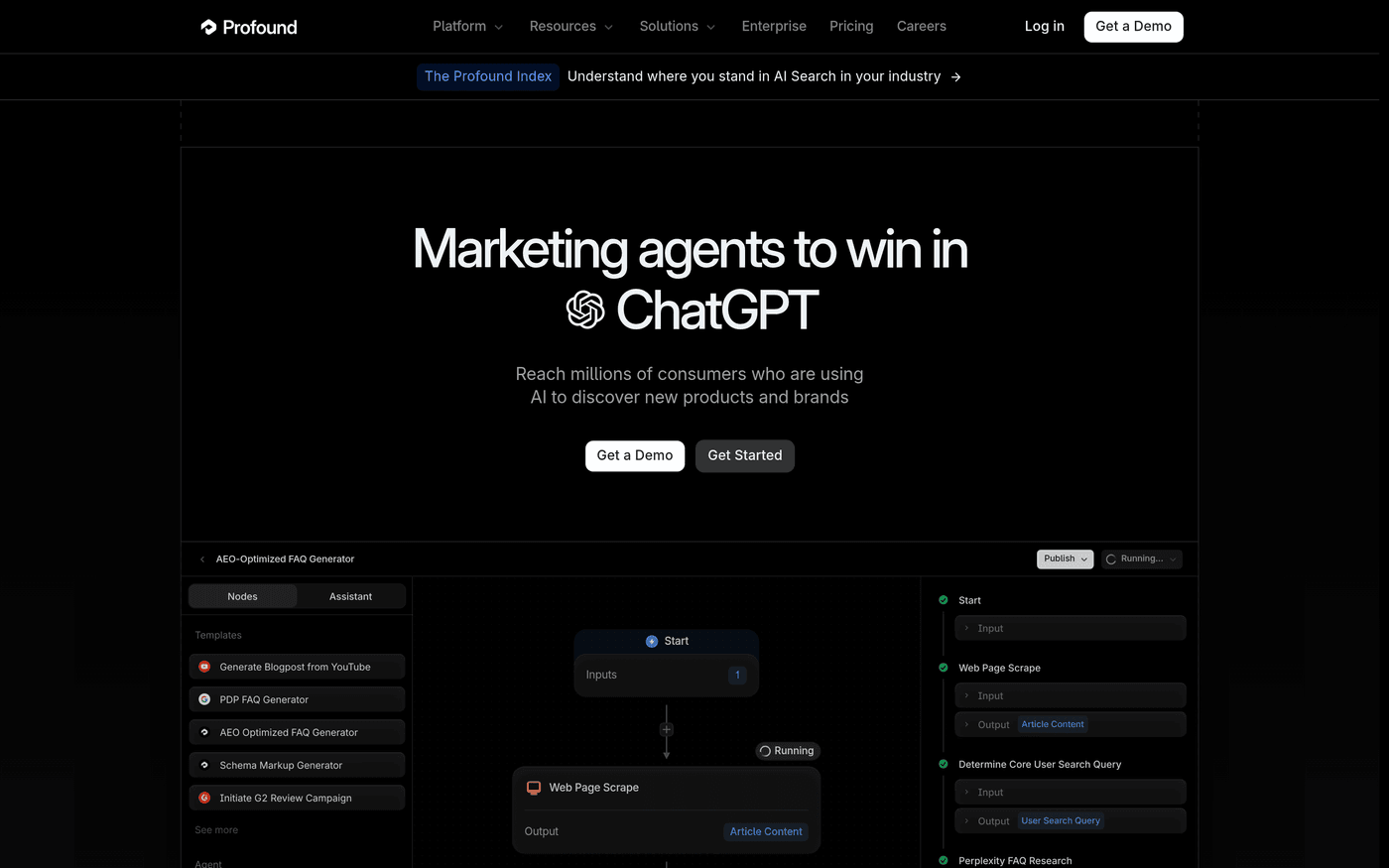
Best enterprise AI search intelligence platform
Profound is one of the most visible enterprise players in AI search intelligence.
It’s built for large brands that need deep AI visibility tracking, large-scale prompt monitoring, citation intelligence, conversation demand analysis, and enterprise reporting.
Profound has also raised significant funding, including a $96M Series C announced in 2026, which has pushed it further into the enterprise category.
Key capabilities
- AI visibility dashboards
- Conversation and prompt intelligence
- Citation analysis
- Share-of-voice tracking
- Enterprise reporting
- Large-scale data collection
- Support for major AI search platforms
Pricing
Profound has historically offered entry pricing around $499/month, with higher tiers and enterprise packages available.
Best for
Profound is best for enterprise brands, large in-house teams, and well-funded organizations that want deep AI search intelligence.
Watch outs
Profound may be overkill for smaller agencies and SMBs. The price, complexity, and enterprise orientation make it a better fit for larger teams.
Read more: Our full Profound review
5. Scrunch AI
Best enterprise AI optimization infrastructure
Scrunch AI is positioned around helping brands become more understandable, accurate, and useful to AI systems.
It goes beyond basic visibility tracking by focusing on how AI engines interpret a brand’s website, content, and customer journey. Its Agent Experience Platform is part of a broader movement toward making brand information easier for AI agents and answer engines to understand.
Key capabilities
- AI visibility monitoring
- Agent experience optimization
- Machine-readable brand and content layers
- Misinformation detection
- Journey mapping
- Enterprise workflows
Pricing
Scrunch has historically listed plans starting around $300/month, with enterprise options available.
Best for
Scrunch is best for enterprise brands that want infrastructure and optimization support, not just monitoring.
Watch outs
If you’re an agency or small business looking for simple visibility tracking, Scrunch may be more complex than necessary.
Read more: Our full Scrunch AI review
6. AthenaHQ
Best mid-market GEO platform
AthenaHQ positions itself as a GEO platform for winning AI search.
It combines prompt tracking, brand monitoring, citation analysis, competitive benchmarking, and an action center for fixing visibility gaps.
Key capabilities
- AI search tracking
- Prompt monitoring
- Competitor benchmarks
- Citation and content gap analysis
- Action Center
- Traffic and ROI analytics
- Support for multiple AI platforms
Pricing
AthenaHQ has been reported with starter pricing around $295/month, though current pricing should be verified directly.
Best for
AthenaHQ is best for growth-stage SaaS companies, mid-market brands, and teams that want deeper AI visibility analytics without going fully enterprise.
Watch outs
Credit-based systems can get expensive if you track too many prompts across too many platforms. Start with high-intent commercial prompts before expanding.
Read more: Our full AthenaHQ review
7. Otterly AI
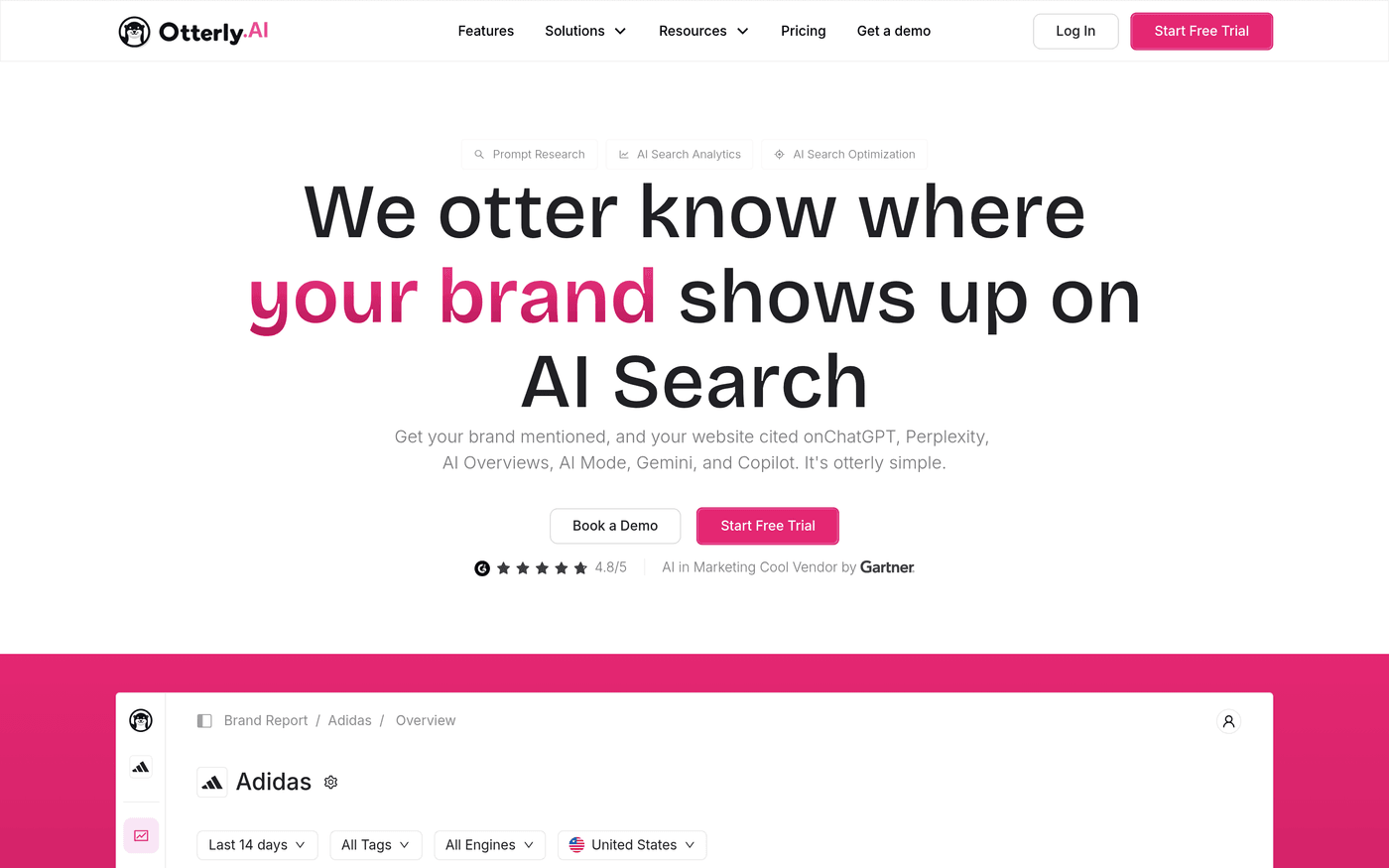
Best budget-friendly AI search monitoring tool
Otterly AI is one of the most accessible AI search monitoring platforms.
It tracks brand mentions and citations across AI search platforms such as ChatGPT, Perplexity, Google AI Overviews, and Microsoft Copilot. Some platforms, such as Google AI Mode and Gemini, may be available as add-ons depending on the plan.
Key capabilities
- Brand mention tracking
- Citation monitoring
- Prompt tracking
- Competitor visibility reporting
- Brand visibility KPIs
- Exportable reports
- Affordable entry plan
Pricing
Otterly AI starts at $29/month for its Lite plan, which currently includes 15 search prompts.
Best for
Otterly is best for smaller brands, freelancers, and agencies that want affordable ongoing AI search monitoring.
Watch outs
Prompt limits can become restrictive quickly. If you manage many clients or many topics, make sure the higher tiers still make sense economically.
Read more: Our full Otterly AI review
8. ZipTie
Best for AI Overviews, ChatGPT, and Perplexity tracking
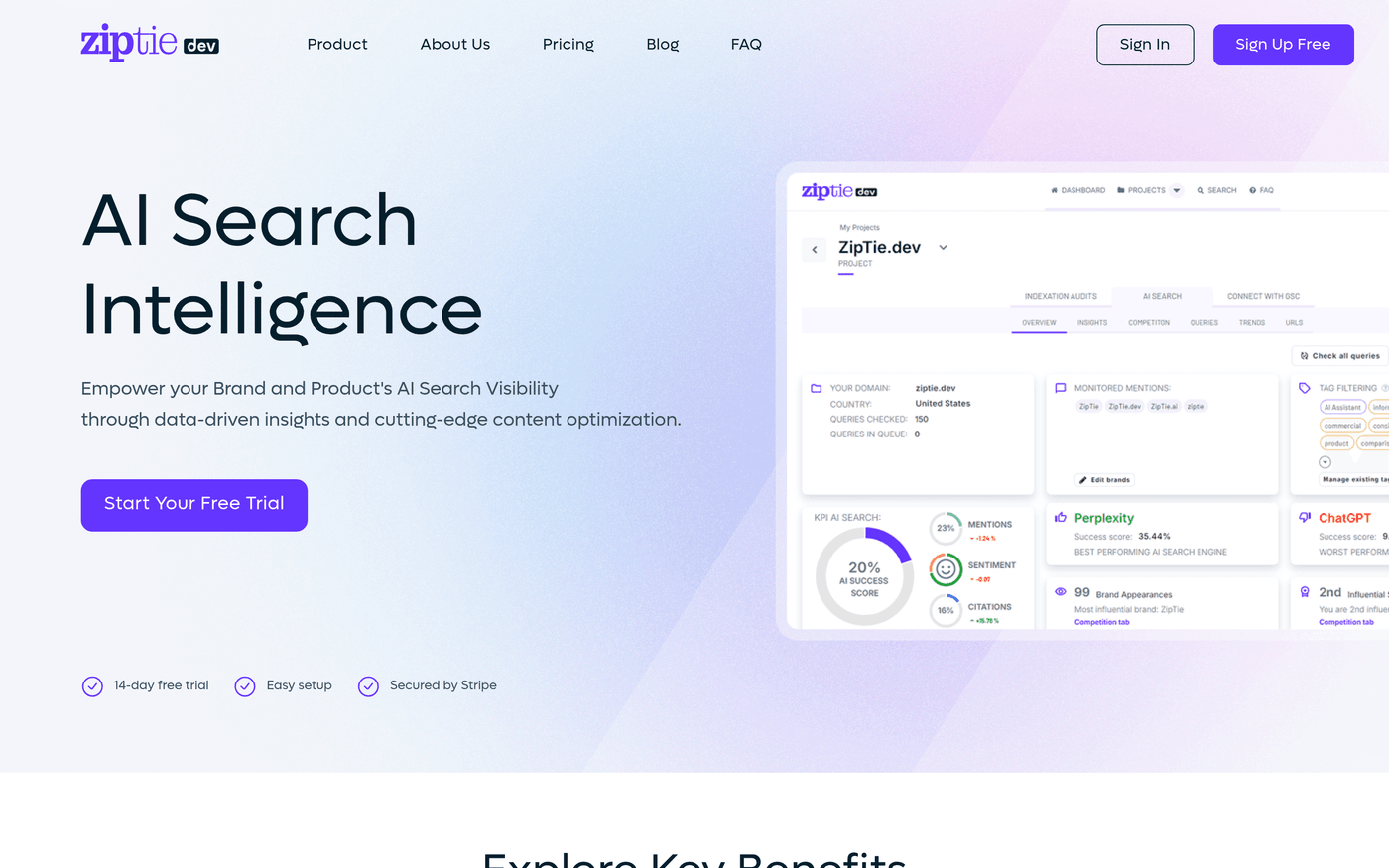
ZipTie is a focused AI search visibility tracker that monitors Google AI Overviews, ChatGPT, and Perplexity.
It’s especially useful for SEOs who care about what shows up in Google’s AI-generated results and want screenshots, checks, summaries, and AI search tracking without adopting a large enterprise platform.
Key capabilities
- Google AI Overviews tracking
- ChatGPT tracking
- Perplexity tracking
- AI search checks
- AI data summaries
- Content optimization support
- Competitor visibility tracking
Pricing
ZipTie currently starts at $69/month for Basic, with Standard at $99/month and Pro at $159/month.
Best for
ZipTie is best for SEOs and agencies that want a practical, focused tracker for Google AI Overviews and major AI answer engines.
Watch outs
If you need broader platform coverage across Gemini, Claude, Copilot, Grok, and other engines, compare ZipTie’s coverage against more comprehensive tools.
Read more: Our full ZipTie review
9. Writesonic GEO
Best for teams already using Writesonic
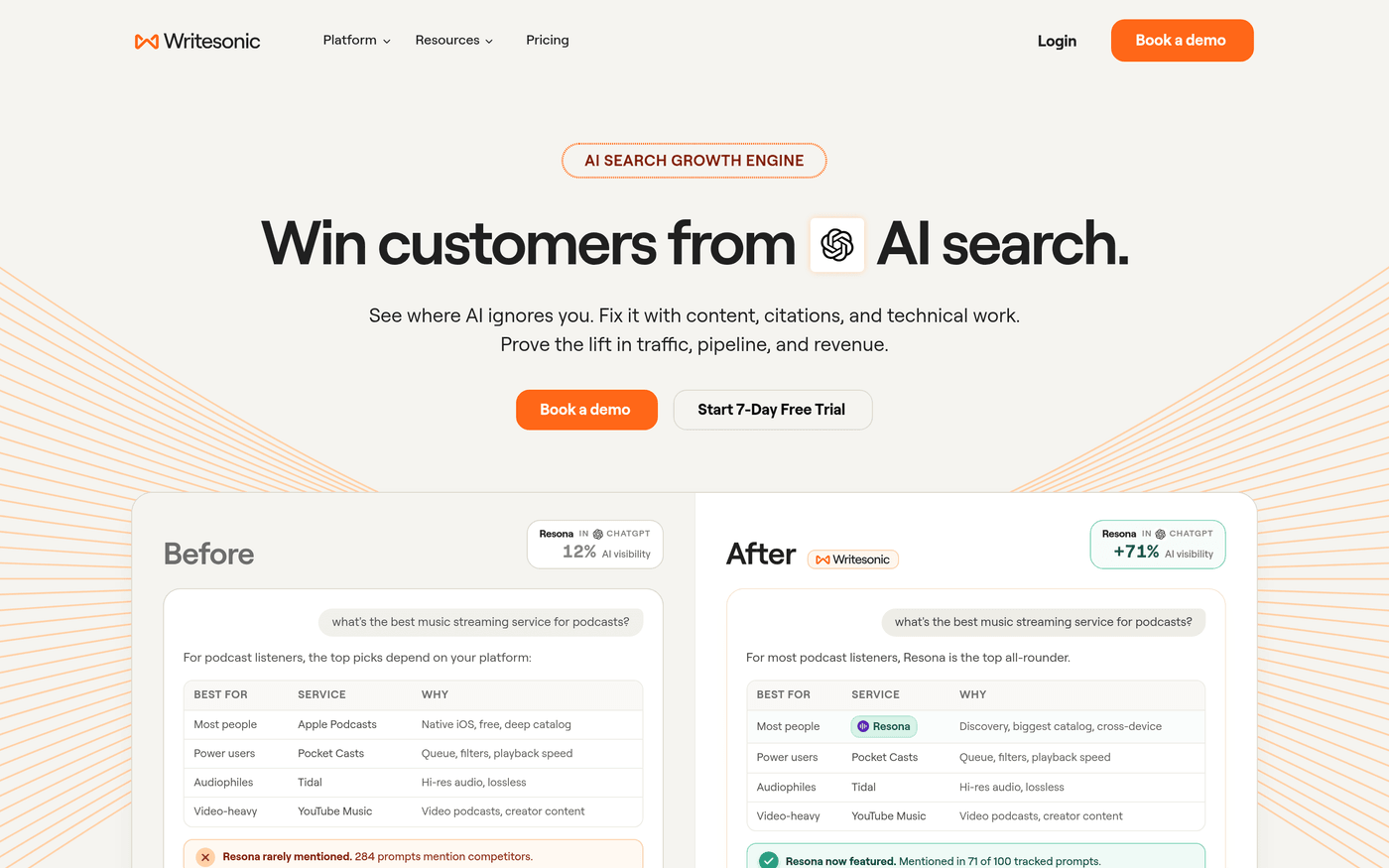
Writesonic GEO is part of Writesonic’s broader AI content and SEO platform.
It helps teams monitor AI search visibility, brand mentions, and competitor presence across AI platforms. It’s a natural fit for teams already using Writesonic for content creation and optimization.
Key capabilities
- AI visibility tracking
- Brand mention monitoring
- Competitor benchmarking
- Sentiment analysis
- AI crawler analytics
- Content recommendations
Pricing
Writesonic’s pricing has changed, with lower-cost entry options and higher tiers for broader AI platform coverage. Verify current pricing before buying.
Best for
Writesonic GEO is best for content teams that already use Writesonic and want AI visibility insights connected to their content workflow.
Watch outs
Make sure the plan you choose includes the AI platforms you actually care about. Some lower-cost plans may have narrower coverage.
Read more: Our full Writesonic GEO review
10. SE Ranking AI Search
Best for SE Ranking users
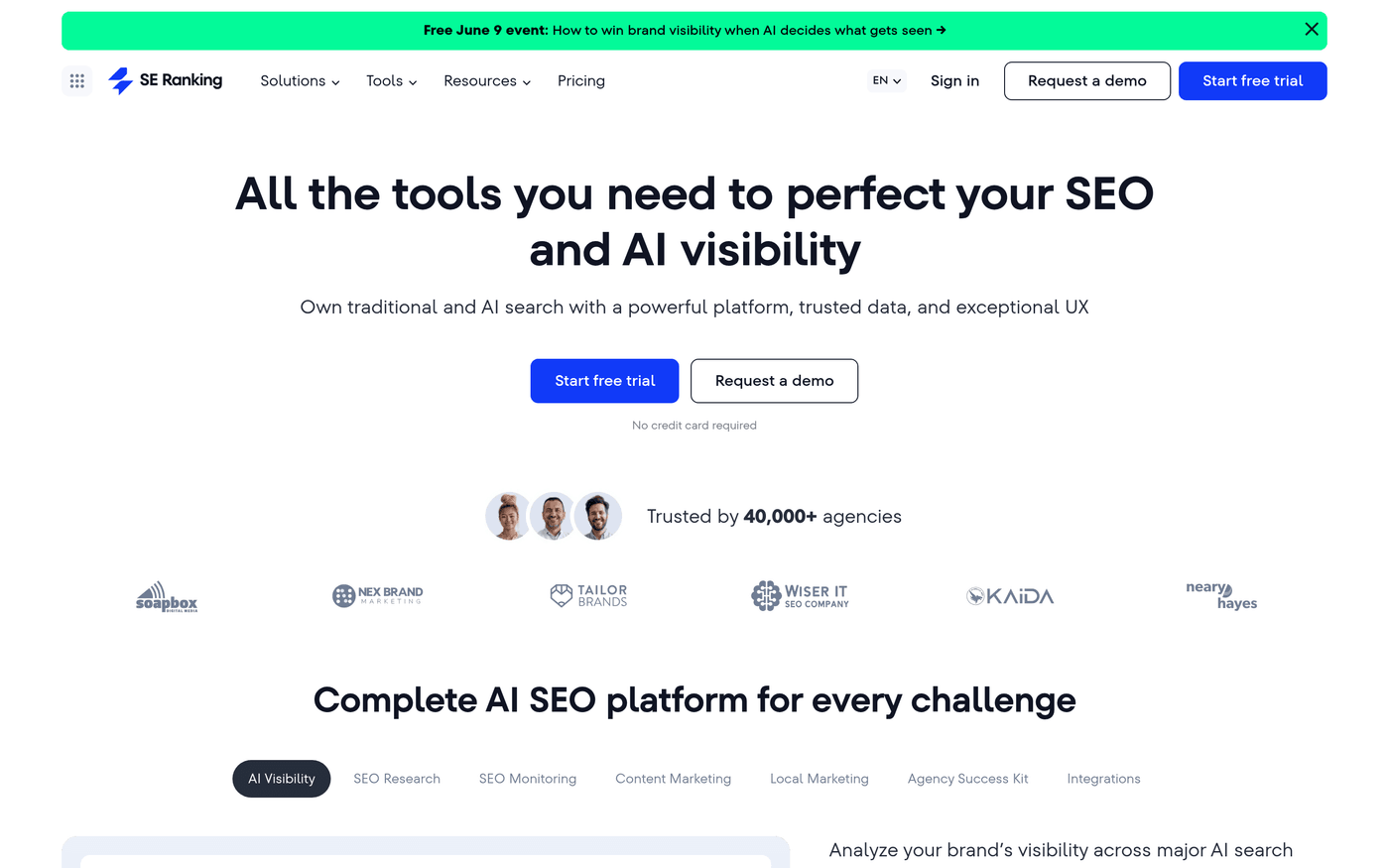
SE Ranking has expanded from traditional rank tracking into AI search visibility.
Its AI search tools can help teams monitor Google AI Overviews, AI Mode, ChatGPT, Perplexity, Gemini, and related AI search surfaces depending on the plan and add-ons available.
Key capabilities
- Traditional rank tracking
- AI search visibility tracking
- Google AI Overviews monitoring
- AI Mode tracking
- Competitor analysis
- Website audit tools
- Agency reporting
Pricing
SE Ranking pricing depends on the plan and AI search add-ons. Verify current packaging because AI search features may not be included in every plan.
Best for
SE Ranking is best for teams already using SE Ranking that want AI visibility monitoring added to their existing SEO toolkit.
Watch outs
Don’t assume AI search tracking is included at no extra cost. Confirm what’s included in your specific plan.
Read more: Our full SE Ranking AI Search review
SE Visible head-to-heads: See how SE Ranking’s SE Visible stacks up against the standalone trackers on this list — SE Visible vs Peec AI, SE Visible vs LLMrefs, SE Visible vs Scrunch AI, SE Visible vs Rankscale AI, and SE Visible vs AthenaHQ.
11. Surfer AI Tracker

Best for Surfer users
Surfer’s AI Tracker extends Surfer’s content optimization ecosystem into AI visibility monitoring.
It helps users understand whether their brand appears in AI-generated answers and where competitors may be winning visibility.
Key capabilities
- AI visibility tracking
- Brand mention monitoring
- Prompt-level insights
- Source and citation visibility
- Trend reporting
- Integration with Surfer workflows
Pricing
Surfer’s AI Tracker pricing and packaging should be verified directly because add-on pricing can change.
Best for
Surfer AI Tracker is best for teams already using Surfer for content optimization.
Watch outs
If you don’t already use Surfer, compare the standalone value against purpose-built AI visibility platforms.
Read more: Our full Surfer AI Tracker review
12. Nightwatch LLM Tracking

Best for teams that want rank tracking plus LLM visibility
Nightwatch is a traditional SEO rank tracking platform that has added LLM tracking.
This makes it a good option for teams that want to keep classic SEO rank tracking and AI visibility tracking inside one familiar system.
Key capabilities
- Traditional rank tracking
- LLM tracking
- ChatGPT and Claude visibility monitoring
- Location tracking
- Daily updates
- Custom views
- Rank distribution metrics
Pricing
Nightwatch pricing has been reported from around $32/month, though AI tracking inclusion should be verified by plan.
Best for
Nightwatch is best for SEO teams that already value rank tracking and want to add AI visibility monitoring without adopting a separate specialist platform.
Watch outs
The AI tracking feature may not be as mature as dedicated AI visibility platforms. Test it against your highest-value prompts before committing.
Read more: Our full Nightwatch LLM Tracking review
13. Keyword.com AI Tracker

Best lightweight AI tracker add-on
Keyword.com is known for rank tracking, and its AI Tracker adds monitoring for AI search platforms.
It’s a practical option for teams that want AI visibility tracking without moving away from a lightweight rank tracking workflow.
Key capabilities
- AI visibility tracking
- Citation monitoring
- Competitive analysis
- Sentiment monitoring
- Scheduling options
- Credit-based usage
Pricing
Keyword.com’s AI tracking has been reported as a lower-cost add-on, but current pricing should be verified directly.
Best for
Keyword.com AI Tracker is best for teams that want a simple AI tracking layer attached to traditional keyword tracking.
Watch outs
Credit usage and refresh cadence matter. Make sure you know how many prompts, platforms, and checks your budget actually supports.
Read more: Our full Keyword.com AI Tracker review
14. Geneo AI
Best simple GEO monitoring option
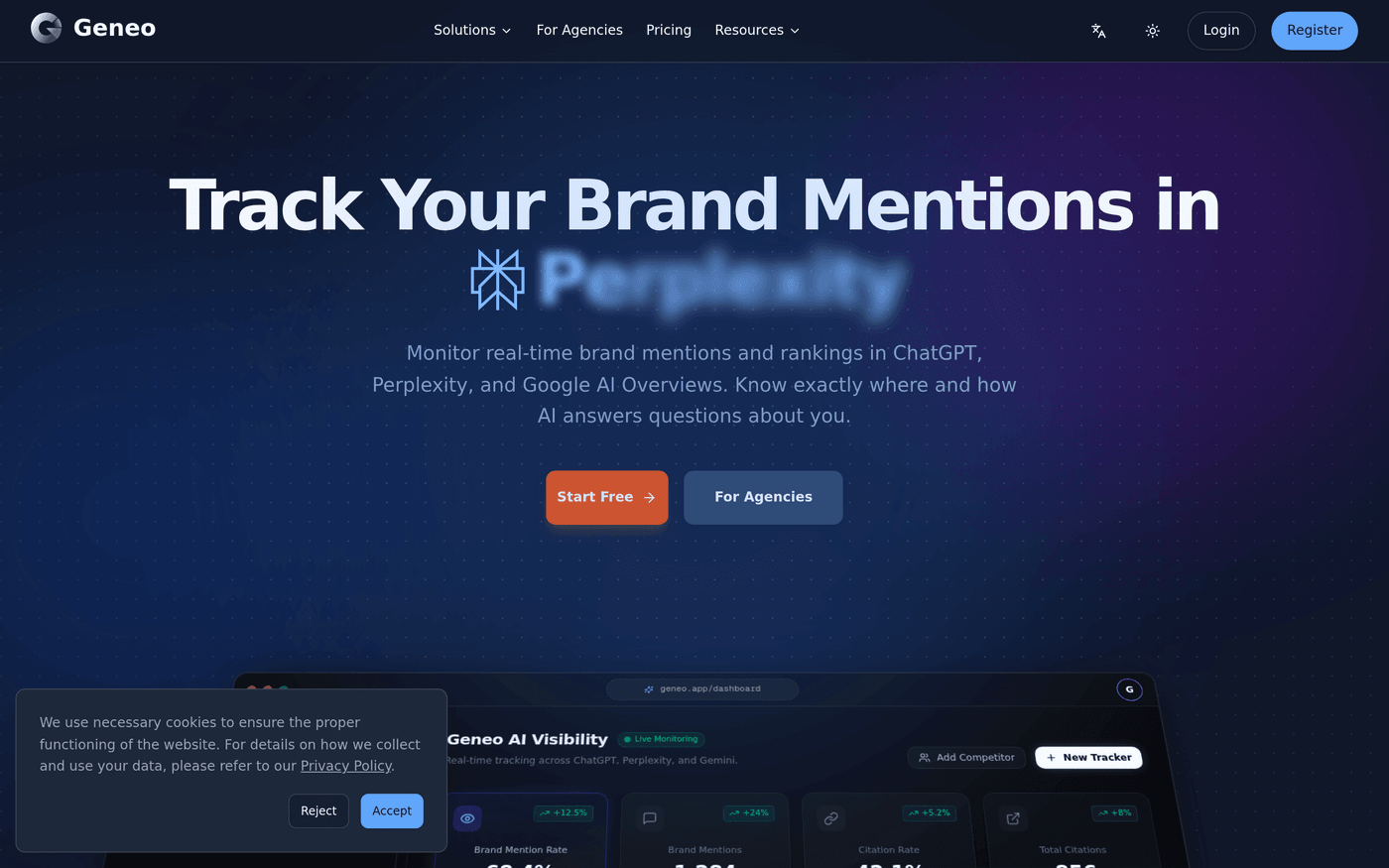
Geneo AI focuses on Generative Engine Optimization monitoring.
It helps brands track how they appear in AI-generated answers, benchmark competitors, analyze sentiment, and identify optimization opportunities.
Key capabilities
- AI visibility monitoring
- Competitor benchmarking
- Sentiment tracking
- Historical query tracking
- AI content suggestions
- Workspace management
Pricing
Geneo’s Pro plan has recently been listed around $39.90/month, with additional options available.
Best for
Geneo is best for teams that want a simpler, lower-cost GEO monitoring tool.
Watch outs
As with many newer tools, review public case studies, testimonials, and platform coverage before relying on it for client reporting.
Read more: Our full Geneo AI review
15. Knowatoa AI
Best for brand visibility monitoring
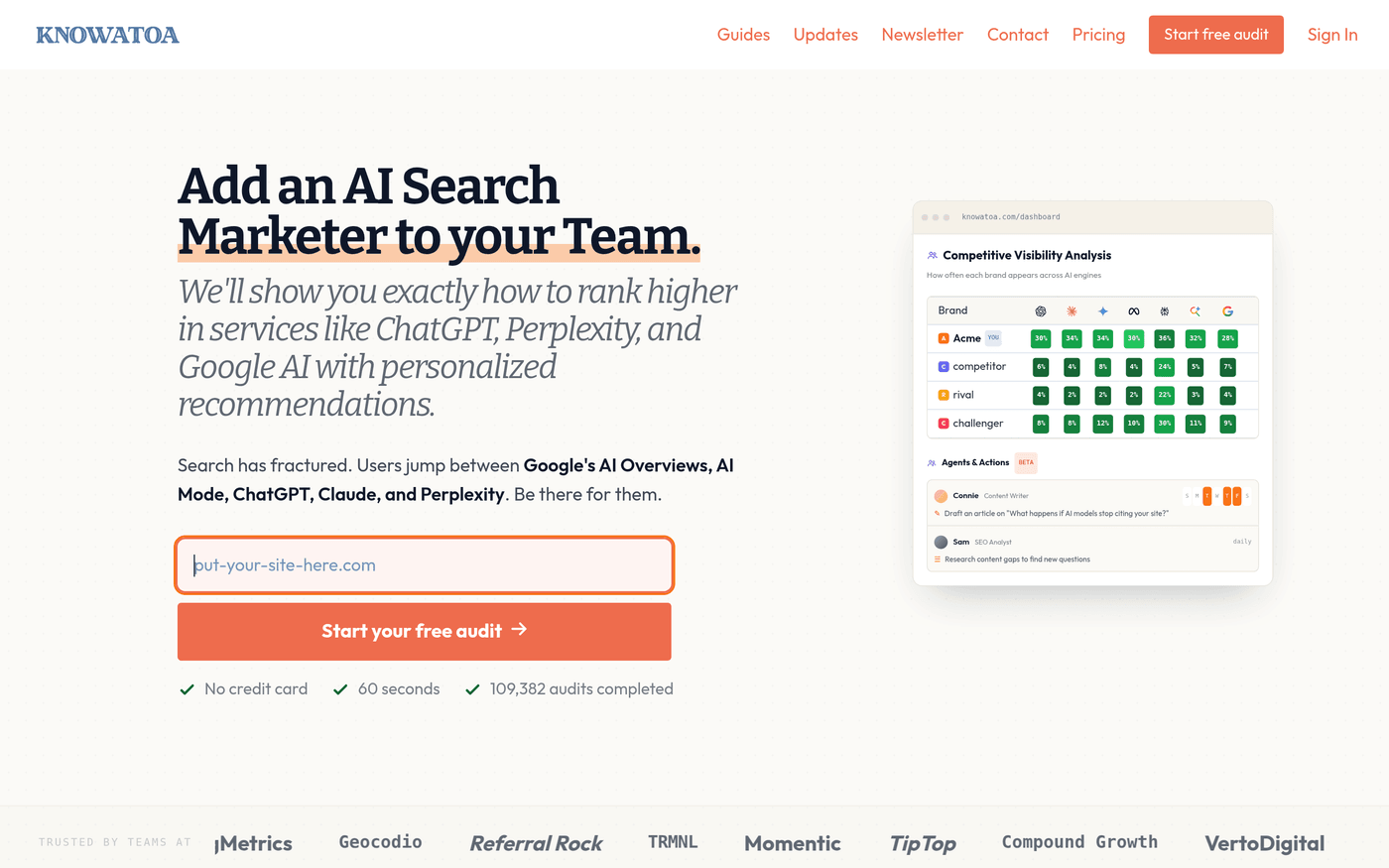
Knowatoa AI is a specialized platform for monitoring brand visibility across AI search systems.
It focuses on whether AI platforms describe your product accurately, whether sentiment is positive, and how your brand compares against competitors.
Key capabilities
- Brand visibility tracking
- Competitor benchmarking
- AI search insights
- Product description monitoring
- Sentiment analysis
- Citation and recommendation tracking
Pricing
Knowatoa’s pricing should be verified directly because public references have varied.
Best for
Knowatoa is best for brands that want to understand how AI systems describe and recommend them.
Watch outs
Public reviews and third-party validation appear more limited than for larger platforms, so test carefully before using it as your only source of truth.
Read more: Our full Knowatoa AI review
16. Am I On AI
Best for AI visibility audits and guided discovery
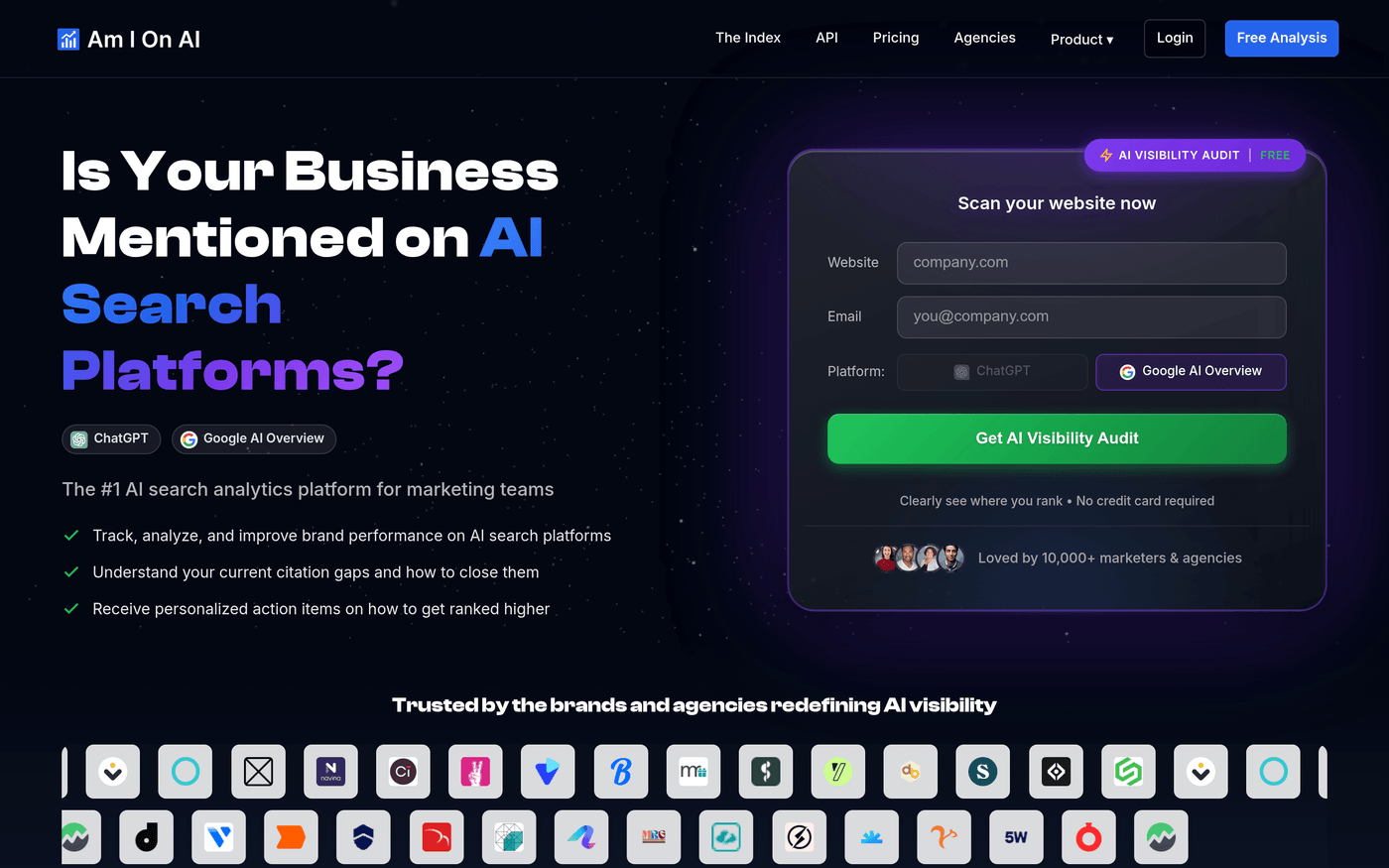
Am I On AI is positioned around helping brands understand whether they appear in AI-generated recommendations.
It’s useful for visibility-gap discovery, competitor comparisons, and understanding whether your brand is showing up when buyers ask AI platforms for recommendations.
Key capabilities
- AI visibility audits
- Brand mention tracking
- Competitor share-of-voice analysis
- Source citation data
- Sentiment tracking
- Guided recommendations
Pricing
Public pricing and offers have shifted. Current public positioning appears more focused on higher-touch analysis or consulting-style packages than a simple low-cost tracker.
Best for
Am I On AI is best for brands that want an initial AI visibility audit or guided analysis.
Watch outs
If you need ongoing client reporting, make sure the product supports recurring tracking, historical trends, exports, and multi-client workflows.
Read more: Best Am I On AI alternatives
17. Hall AI
Best for GEO answer insights
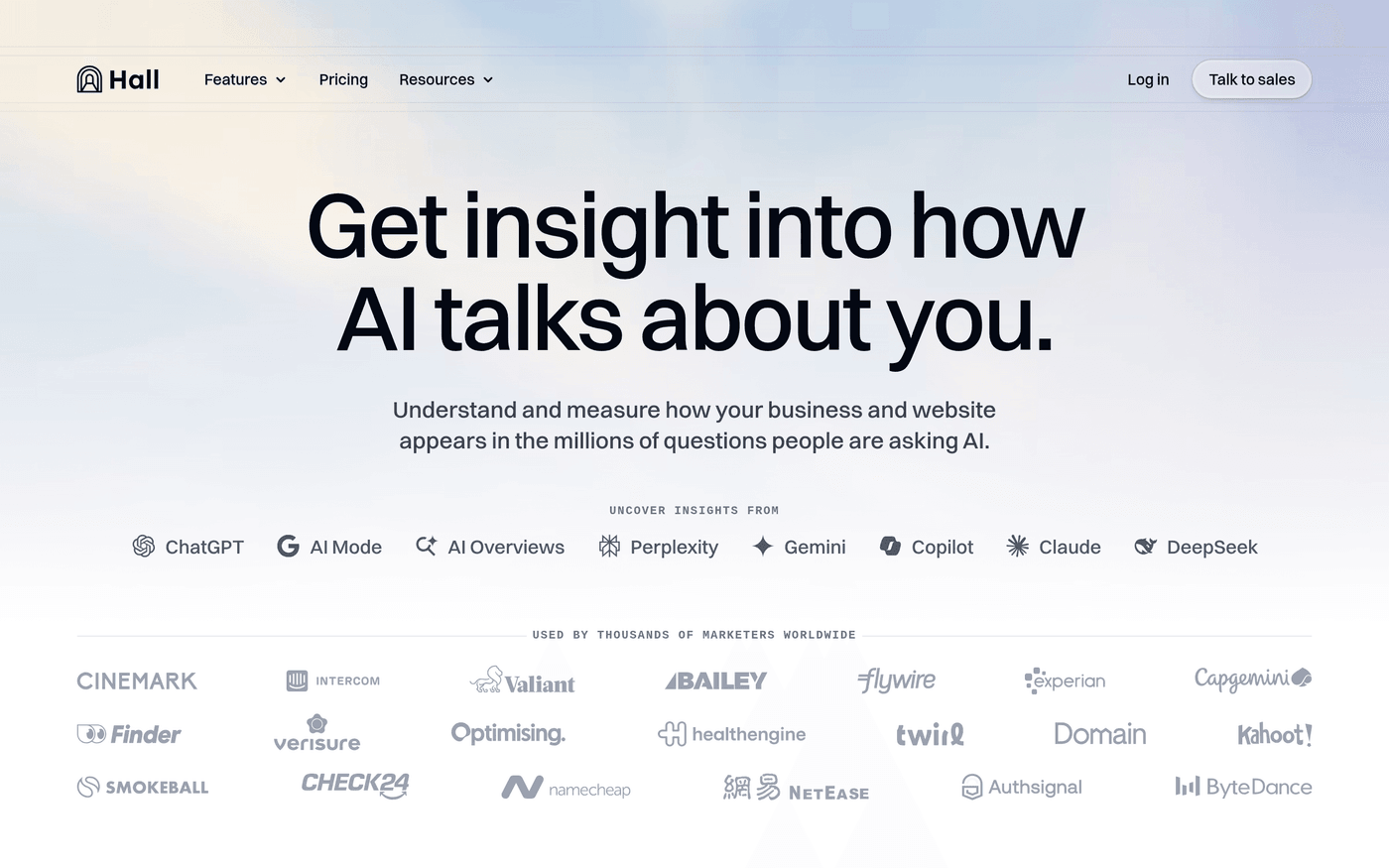
Hall AI is a GEO platform focused on tracking how brands appear across AI search engines.
It includes answer insights, citation insights, agent analytics, and visibility monitoring across platforms like ChatGPT, Perplexity, Claude, and Gemini.
Key capabilities
- Generative answer insights
- Citation insights
- Agent analytics
- AI visibility tracking
- Competitor monitoring
- Conversational commerce insights
Pricing
Hall AI appears to offer free or Lite access plus paid plans. Verify current pricing directly before purchasing.
Best for
Hall AI is best for marketers exploring GEO and AI answer visibility with a focus on insights and monitoring.
Watch outs
The category is still young, so evaluate depth of data, platform coverage, and reporting before using it for serious client work.
Read more: Our full Hall AI review
18. Ahrefs Brand Radar
Best traditional SEO suite with AI visibility
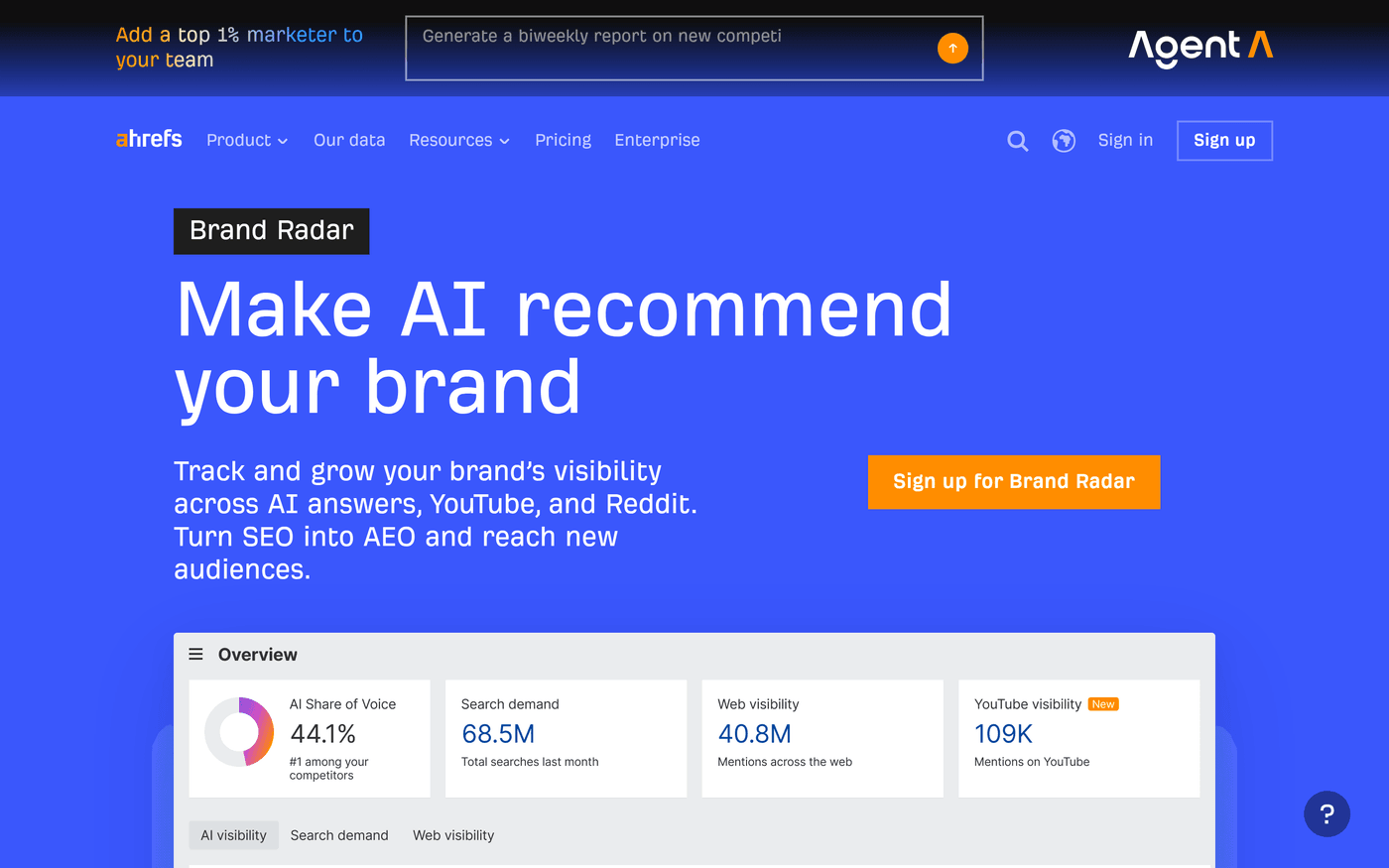
Ahrefs Brand Radar brings AI visibility tracking into one of the most established SEO platforms.
Its biggest advantage is data scale. Ahrefs has a massive SEO dataset, and Brand Radar extends that data advantage into AI visibility tracking across major AI platforms.
Key capabilities
- AI visibility monitoring
- Brand and product research
- Search-backed prompt database
- Custom prompt tracking
- AI Overviews, AI Mode, ChatGPT, Copilot, Gemini, Perplexity, and Grok coverage
- Competitive visibility analysis
- Integration with the Ahrefs ecosystem
Pricing
Ahrefs Brand Radar pricing varies by coverage. Recent public pricing has shown selected platform coverage around $398/month and full AI coverage around $699/month.
Best for
Ahrefs Brand Radar is best for SEO teams already using Ahrefs that want AI visibility data tied to a large search dataset.
Watch outs
Brand Radar can be expensive if you need full AI platform coverage. It may be strongest for research and analysis, but agencies still need a workflow for turning insights into action.
Read more: Our full Ahrefs Brand Radar review
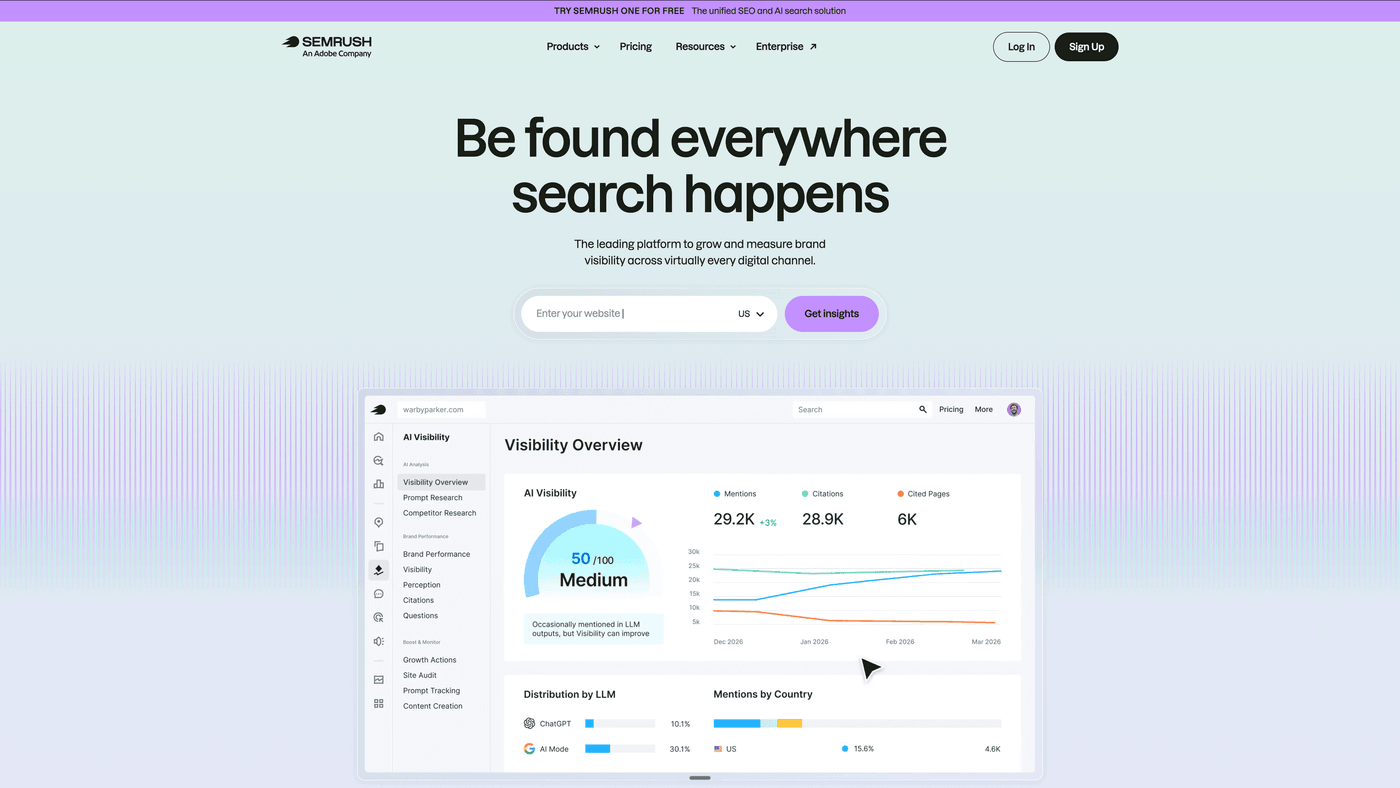
19. Semrush AI Visibility Toolkit
Best for Semrush users
Semrush’s AI Visibility Toolkit helps brands monitor how they appear across AI platforms and understand sentiment, prompts, competitors, and topic opportunities.
It’s a logical option for teams already using Semrush, especially if they want AI visibility reporting alongside classic SEO data.
Key capabilities
- AI visibility tracking
- Brand performance analysis
- Prompt tracking
- AI search checks
- Sentiment analysis
- Competitor insights
- Reporting for agencies and in-house teams
Pricing
Semrush lists its AI Visibility Toolkit at $99/month for one domain. Semrush One and broader SEO packages have separate pricing.
Best for
Semrush AI Visibility Toolkit is best for Semrush users who want to add AI visibility tracking without changing platforms.
Watch outs
The $99/month price can scale quickly if you need multiple domains, more prompts, or additional users. Agencies should calculate the true cost across all clients before standardizing on it.
Read more: Our full Semrush AI Visibility Toolkit review
20. seoClarity ArcAI
Best for enterprise SEO teams
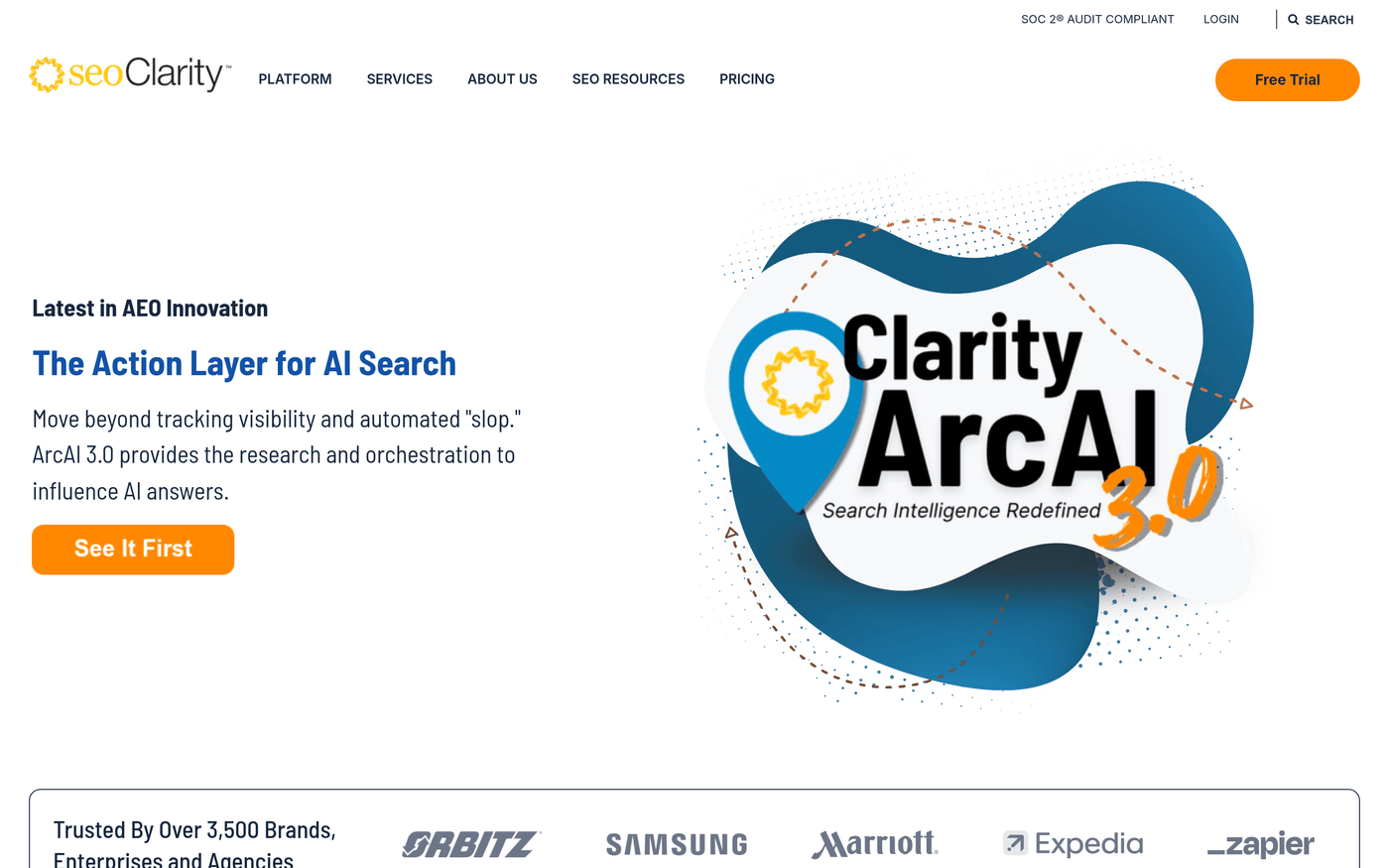
seoClarity ArcAI is designed for enterprise AI search optimization.
It combines visibility tracking, sentiment analysis, AI bot activity monitoring, and optimization recommendations inside seoClarity’s broader enterprise SEO platform.
Key capabilities
- AI search visibility tracking
- Google AI Overviews and AI Mode monitoring
- ChatGPT, Gemini, and Perplexity insights
- Sentiment analysis
- AI bot activity monitoring
- Enterprise reporting
- Optimization recommendations
Pricing
seoClarity ArcAI is best treated as custom enterprise pricing unless you receive a direct quote.
Best for
seoClarity ArcAI is best for large organizations that already need enterprise SEO infrastructure.
Watch outs
This is not a lightweight tool. Expect onboarding, configuration, and enterprise-level pricing.
Read more: Our full seoClarity ArcAI review
21. AirOps
Best AI search workflow platform
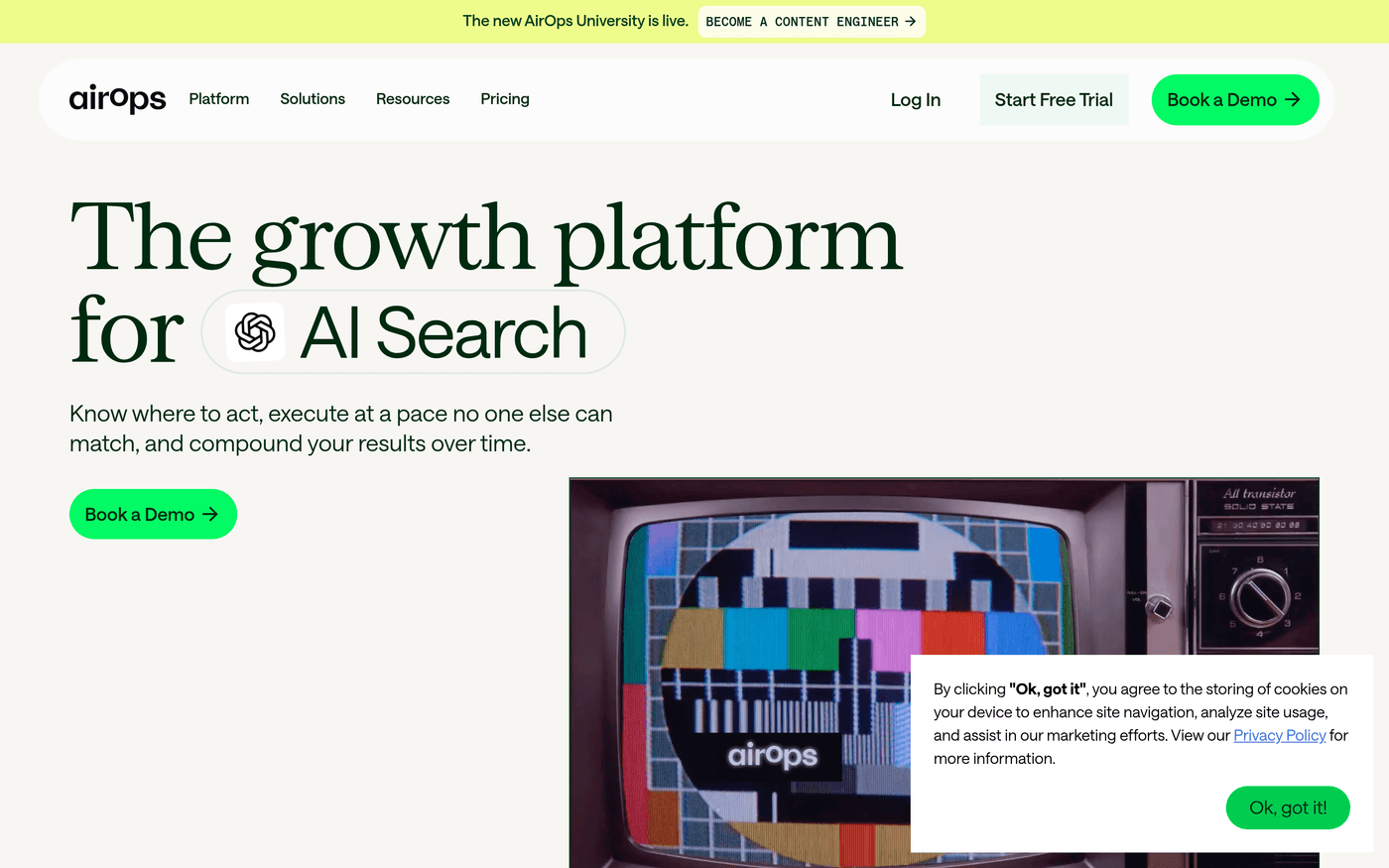
AirOps is not just an AI visibility tracker.
It’s better understood as an AI search and content workflow platform. It helps marketing teams build workflows for content refreshes, SEO programs, AI search visibility, and scalable content operations.
That makes it different from tools that only monitor AI mentions.
Key capabilities
- AI search visibility workflows
- Content engineering
- No-code AI workflows
- Human review steps
- CMS integrations
- Content planning
- Answer Engine Visibility
- Enterprise workflow automation
Pricing
AirOps has free or entry-level options plus custom and higher-tier workflow plans. Pricing depends heavily on use case and scale.
Best for
AirOps is best for teams that want to operationalize AI search insights through content workflows, not just monitor visibility.
Watch outs
If your only goal is AI search rank tracking, AirOps may be broader than you need. It’s strongest when you’re building repeatable workflows for content and AI search performance.
Read more: Our full AirOps review
22. Rankscale AI
Best low-cost AI search monitoring option
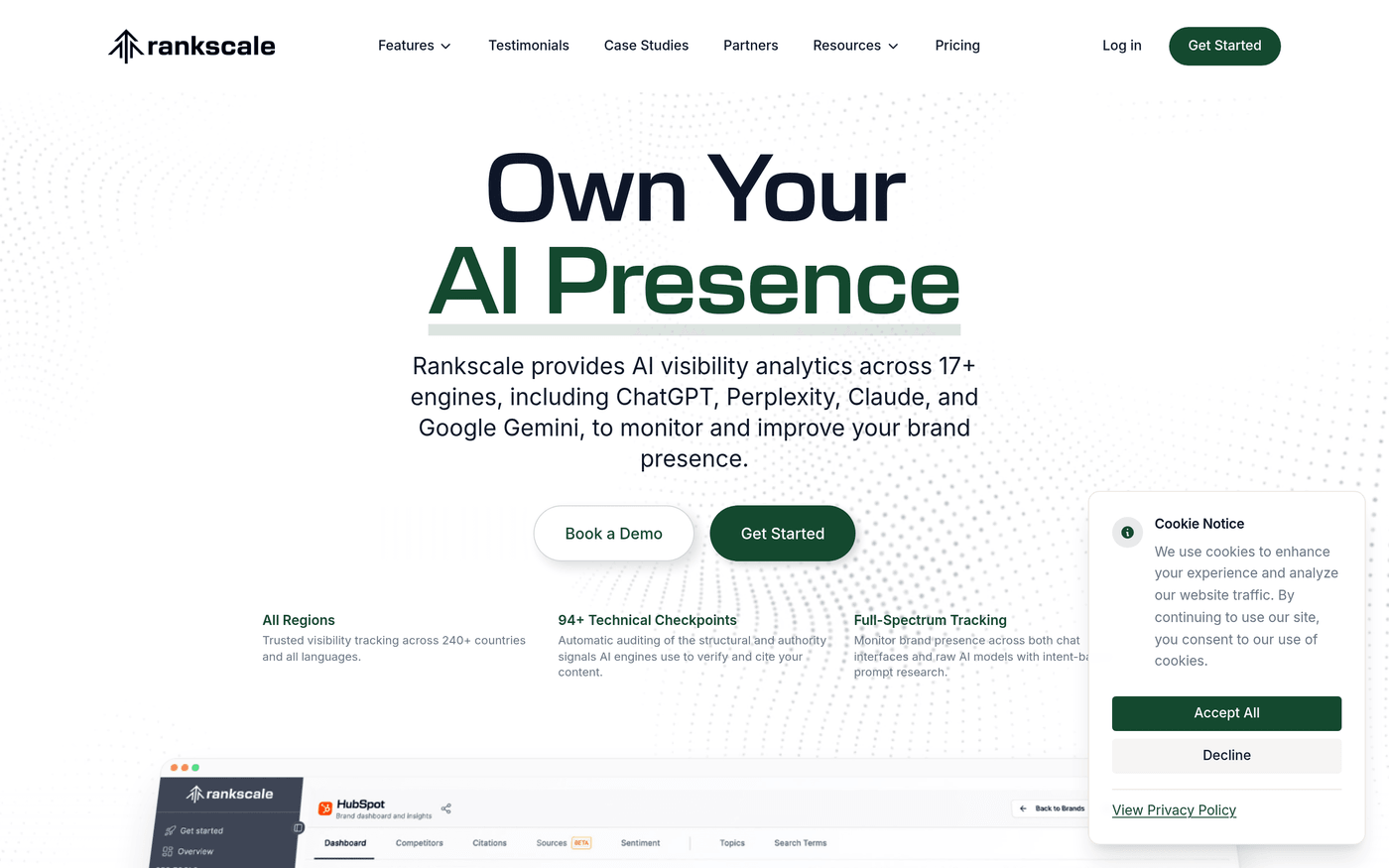
Rankscale AI is a budget-friendly AI search monitoring platform.
It tracks visibility across AI platforms and provides dashboards for brand visibility, competitor benchmarking, citations, and sentiment.
Key capabilities
- AI search monitoring
- Daily tracking
- Brand dashboards
- Competitor benchmarking
- Citation analysis
- Sentiment tracking
- AI Readiness scoring
Pricing
Rankscale AI has been listed from around €20/month for entry-level usage.
Best for
Rankscale AI is best for budget-conscious users who want to start tracking AI search visibility without a major software commitment.
Watch outs
Lower-cost tools may have more limits around credits, platform coverage, and reporting depth. Test it before using it for client deliverables.
Read more: Our full Rankscale AI review
What to Look for in an AI Search Visibility Tool
Before you buy any AI search visibility tool, answer these questions.
1. Which AI platforms does it actually track?
At minimum, most teams should care about:
- ChatGPT
- Google AI Overviews
- Google AI Mode
- Perplexity
- Gemini
- Claude
- Copilot
- Grok
Not every platform matters equally for every business. But if your customers use it to discover products, services, or experts, you need visibility there.
2. Does it track citations or only mentions?
Mentions tell you whether your brand appeared.
Citations tell you where the AI answer got its information.
That’s critical because citations reveal what sources influence AI answers. If competitors are being cited from third-party lists, review pages, Reddit threads, YouTube videos, comparison posts, or industry directories, that tells you where to focus.
3. Does it show trends over time?
One-off visibility checks are useful, but they’re not enough.
AI answers are variable. A brand might appear in one answer and disappear in the next. The better tools help you track trends, recurring citations, average visibility, prompt clusters, and competitor movement over time.
4. Can your team act on the data?
This is the most important question.
A dashboard doesn’t improve visibility by itself.
You need a workflow for turning AI visibility gaps into actions:
- Update existing pages
- Create new comparison content
- Improve entity clarity
- Earn mentions on cited sources
- Strengthen topical authority
- Improve third-party validation
- Add supporting data and proof
- Build better client reporting
- Monitor changes after implementation
The best tool is the one your team will actually use to make decisions and execute. If you want software that handles the execution itself, our roundup of the best AI SEO agents compares the agents that make verified changes instead of only reporting scores.
5. Does it fit your business model?
A solo SaaS founder, a local SEO consultant, a 20-person agency, and an enterprise brand don’t need the same tool.
Use this simple framework:
- If you’re an agency, choose Rankability, Peec AI, SE Ranking, Semrush, Ahrefs, or Profound depending on client size and budget.
- If you’re a startup or SMB, choose LLMrefs, Otterly, Geneo, ZipTie, or Rankscale.
- If you’re an enterprise brand, choose Profound, Scrunch AI, seoClarity ArcAI, Ahrefs Brand Radar, or AirOps.
- If you’re already committed to an SEO suite, start by testing that platform’s AI visibility features before adding another tool.
- If you want workflows, not just tracking, look at Rankability or AirOps.
Final Verdict
The best AI search visibility tool depends on your use case.
If you’re an agency that needs to track visibility and improve client results, start with Rankability. It gives you AI visibility tracking, SEO workflows, content optimization, auditing, research, and reporting in one platform.
If you want a specialist AI search analytics platform, Peec AI is one of the strongest pure-play options.
If you want an affordable entry point, LLMrefs, Otterly AI, ZipTie, Geneo, and Rankscale AI are worth testing.
If you’re an enterprise brand with a larger budget, Profound, Scrunch AI, Ahrefs Brand Radar, seoClarity ArcAI, and AirOps are stronger fits.
The key is to avoid buying a dashboard just because it shows a visibility score.
AI search visibility is only valuable if you act on it.
The brands and agencies that win won’t be the ones that stare at the prettiest charts. They’ll be the ones that track the right prompts, understand the sources AI engines trust, fix visibility gaps faster than competitors, and build repeatable workflows for improving AI search performance over time.