

This article combines Google’s guidance with historical industry research. The study figures and screenshots describe their original samples; they are not new measurements of the web in 2026.
Quick Answer
Yes, links remain part of Google’s ranking systems. Google’s ranking-systems guide confirms that PageRank has evolved and remains in use. It does not assign backlinks a universal top-three position or fixed percentage weight.
Backlinks are still important for SEO performance because they are the foundation of Google’s original PageRank algorithm. Industry studies report associations between backlinks and search performance. Those correlations do not isolate the effect of links from other differences between pages.
Now here’s the cool part:
We’ve gathered all of these industry studies in one spot for you.
Let’s dive in.
What backlink studies show
1. Powerful Sites = Better SEO Performance
Look through any Google Search Engine Results Pages (SERPs), and you’ll see one thing in common:
Search engines like Google love authority sites.
“Authority,” in this case, is defined as having a number of links from trustworthy sites. And there is overwhelming data to support this idea.
AI citation visibility shows a different page-level pattern: 72.8% of AI-cited pages had zero page-level referring domains. That means direct backlinks were not a prerequisite in the observed sample, not that links never matter.
Backlinko studied 11.8 million Google search engine results and found that:
“A site’s overall link authority (as measured by Ahrefs Domain Rating) strongly correlates with higher search engine rankings.” - Backlinko
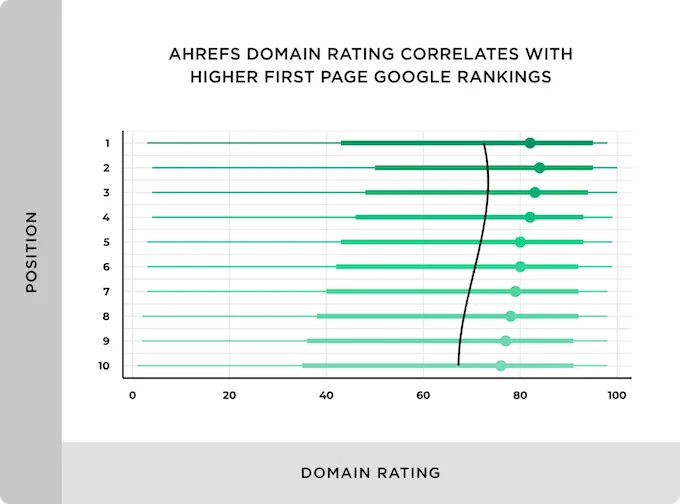
Image Credit: Backlinko
The archived Semrush chart below comes from its historical ranking-factor research. A preserved copy of Semrush’s Ranking Factors Study 2.0 describes the relationship between referring domains and search position, alongside the limits of interpreting those observations. This PDF is hosted by a third party.
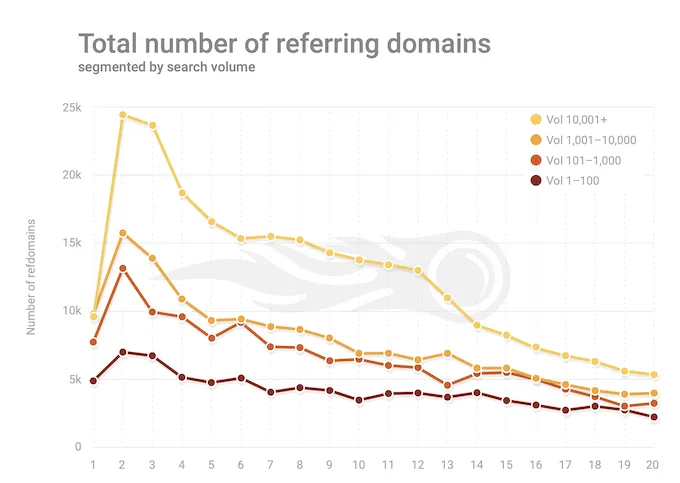
Image Source: Semrush
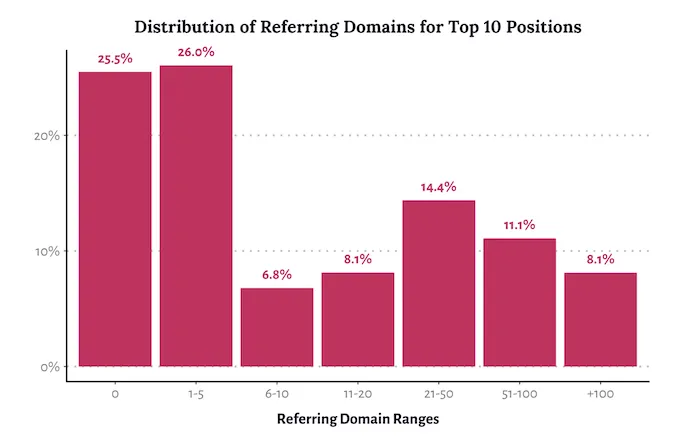
Rankings.io conducted a ranking factor study in the personal injury sector to solidify this point even further and found similar results. They said:
“While the number of referring domains per page appears not to influence rankings, the overall number of referring domains for the domain was a top indicator of overall domain traffic.” - Rankings.io
Let’s start by saying that “Domain Rating” is not a metric that search engines use.
It’s a third-party metric created by Ahrefs.
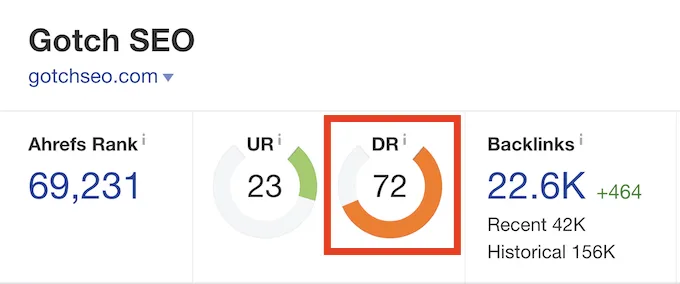
It’s not complete, but it’s a useful gauge for anyone doing SEO.
Use DR as a third-party comparison metric, not as a Google score or the goal of a campaign.
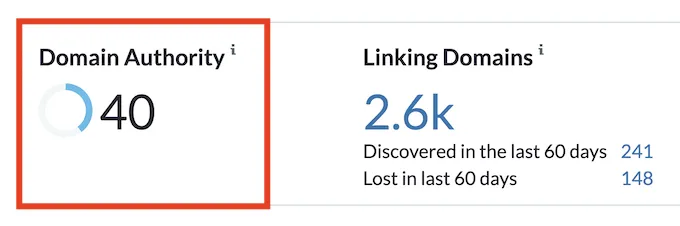
Moz also has its metric for measuring the strength of one website.
It’s called DA (Domain Authority).
You can also look at the Majestic SEO Trust Flow metric to gauge site strength.
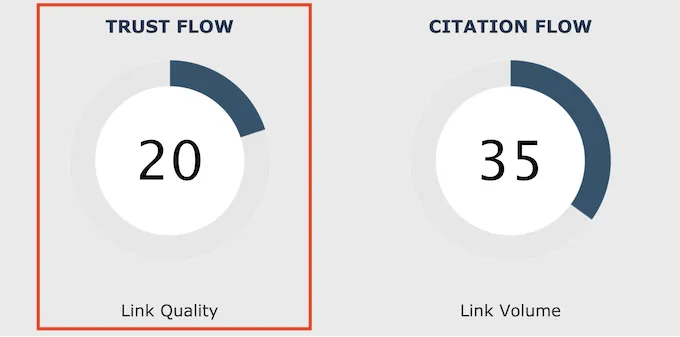
DA and Trust Flow are also third-party metrics. Evaluate relevant referral traffic, useful editorial coverage, and search performance alongside them; higher tool scores do not guarantee higher rankings.
You get the point by now. The data supports the idea that you need to work super hard to get more links to your site. That is how you grow your website authority.
But you must also acquire website links to the actual pages you want to rank on search engines like Google.
Here’s the data to support that:
2. Powerful Pages = Better SEO Performance
It’s possible for a page to rank without a number of backlinks hitting it directly. That’s what happens when your site has established authority.
For example, when Forbes publishes a new article, they often rank on the first page (without any direct links).
That said, Forbes is the exception. Most sites will need direct links to SEO-driven pages.
Here is data from Ahrefs to support this idea:
The Ahrefs search traffic study reports a correlation between referring domains and estimated search traffic.
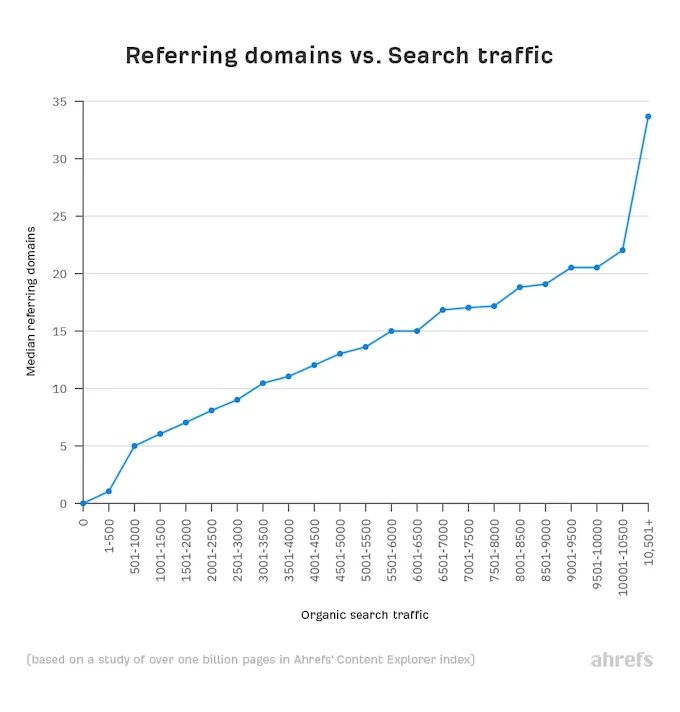
Image Credit: Ahrefs
The archived chart illustrates the original sample. Ahrefs has since updated its study; use the linked report for its current sample definitions rather than treating these screenshots as live counts.
This data point is easy to take out of context. Why?
Because it didn’t specify the quality of links, many pages online have a large number of backlinks, but they have terrible search engine performance.
That’s because their backlinks are low-quality.
Remember:
The goal is to get backlinks from QUALITY sites.
Reread that ten times.
There is no nuance more critical.
Have no standards, and you will pay the price.
3. Better SEO Performance = More Backlinks
The rich get richer in SEO. This means the better your SEO performance, the more links you’ll acquire. I call this “The Snowball Effect.”
Backlinko’s study reported an association:
The Backlinko ranking study reported 3.8 times as many backlinks for the first result, on average, as for positions 2–10 in its sample.
Ahrefs found similar results:
In its 2018 backlink growth study, Ahrefs found that higher-ranking pages tended to acquire more links. The study explicitly cautions that it cannot establish cause and effect.
And Semrush’s study agreed as well:
Semrush’s historical study also reported an association between referring domains and ranking position; it did not establish that a particular link count guarantees a position.
In short, once you achieve high rankings, you’ll start to get organic links. As a result, your page strengthens and will often solidify your positions.
Keep in mind that the exception to this rule is with competitive keywords.
Here’s the truth:
Having more inbound links isn’t enough to maintain rankings for competitive SERPs.
You also have to keep your page updated and fresh.
For example, a powerful page with stale content likely won’t maintain rankings.
In short, don’t get complacent once you start ranking.
You have to battle to keep those rankings. That means consistent link growth and fresh content.
4. Your Website Needs Vote (Backlink) Diversity
Backlinko also reported a correlation between the number of referring domains and ranking position in the same study.
You should aim to get links from many different trustworthy sites in your industry. If we equate links to votes, this makes perfect sense.
Many votes (backlinks) from different sources are more valuable than many votes from one source.
It’s hard to measure, but there are likely diminishing returns from getting links from the same website.
Now, would it hurt to get several links from The Washington Post? No way.
Let’s say you chose between two links from The Washington Post or one link from fifteen different DR 20 blogs in your industry.
What would you pick?
Here’s a comparison:
The historical screenshot below reports 730,000 referring domains for The Washington Post. It is an archived tool snapshot, not a current count.
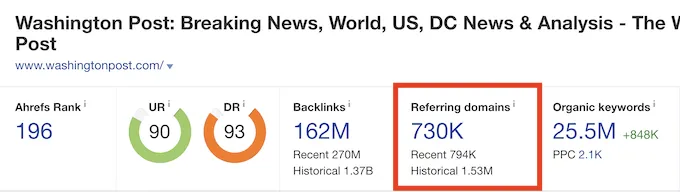
The second historical screenshot reports 80 referring domains for Retailbound.com, with a DR of 24.
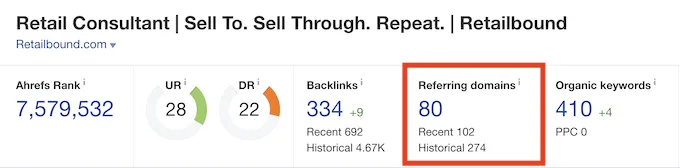
These tool snapshots illustrate differences between backlink profiles. Referring-domain counts cannot be added together or discounted by an invented percentage to calculate the ranking value of a link. Relevance, editorial context, and the linking page matter; this comparison does not prove that one placement is worth a fixed number of others.
5. Most Pages Don’t Get (Deserve) Backlinks
An earlier version of the Ahrefs search traffic study reported that 66.31% of pages in its sample had no backlinks. This is the historical figure cited in this article, not a current web-wide estimate.
Backlinko’s 2019 content study reported no external backlinks for 94% of sampled posts. Here, external links means incoming backlinks, not missing outbound citations.
Most pages aren’t worth linking to, so this makes perfect sense. Also, most sites aren’t engaging in link building campaigns.
The whole “build it, and they will come” mentality doesn’t work well with SEO.
Plan relevant promotion alongside publication, and adjust the effort based on your audience and results rather than a fixed time allocation.
Put the research into practice
Earn relevant editorial links to useful pages, and avoid buying links intended to manipulate rankings. These related guides explain how to assess link context and accessibility: