

What are the best SEO books you should invest in right now?
I started this project by purchasing 27 SEO books on Amazon and spending more than 40 hours reading them.
So I sat my butt down in a chair and read all these SEO books.

It was sometimes painful, but worth showing you what’s worth investing in.
I’ve updated my recommendations for 2026, including my new book, AI SEO For Dummies. This guide will show you my seven picks, what I took away from them, and which one makes sense for you.
A quick disclosure: I wrote AI SEO For Dummies and The SEO Entrepreneur, and I’m the co-founder and CEO of Rankability. Those two recommendations come from the author. The other five come from my reading experience. Some book links are affiliate links, which means I may earn a commission if you purchase through them.
Let’s dive in.
The Best SEO Books at a Glance
If you want help with AI search, start with AI SEO For Dummies. If you want a broad SEO reference, my pick is The Art of SEO. And if your goal is to build an SEO business, start with The SEO Entrepreneur.
Here’s how I’d choose based on what you need to accomplish:
| Book | Author(s) | My pick for | Keep in mind |
|---|---|---|---|
| AI SEO For Dummies | Nathan Gotch | Building an AI search visibility campaign | Published by Wiley in September 2026 (368 pages); focused on AI search rather than SEO fundamentals |
| The SEO Entrepreneur | Nathan Gotch | Starting and growing an SEO business | Business building is the focus |
| The Art of SEO | Eric Enge, Stephan Spencer, and Jessie Stricchiola | Learning SEO fundamentals and building a reference library | It’s a substantial read; check which edition you’re buying |
| Ultimate Guide to Link Building | Garrett French and Eric Ward | Understanding link-worthy assets and outreach | Some tools and tactical details need current verification |
| The SEO Blueprint | Ryan Stewart | Organizing agency delivery and client campaigns | Most relevant when you’re managing SEO work |
| Product-Led SEO | Eli Schwartz | Connecting SEO with product and business strategy | Don’t expect a checklist of on-page fixes |
| The Executive SEO Playbook | Jessica Bowman | Getting internal buy-in and building SEO into team workflows | More about organizational execution than beginner tactics |
These books solve different problems. You don’t need to buy all seven.
One more thing: my original reading project happened before this update. The takeaways and screenshots below reflect that experience. A newer edition may have different examples, tools, or page counts, so check the edition before you buy.
For more options beyond these seven picks, browse the Top SEO Books library, a separate publication I own. You can explore book profiles by topic and find reading guides for different experience levels.
Which books cover AI SEO, AEO and GEO?
A small group of 2025 and 2026 books now covers AI search directly. Some use the term answer engine optimization (AEO), some use generative engine optimization (GEO), and some call it AI SEO. They overlap a lot, so pick based on the depth and format you want.
One of these books is mine, so treat that pick as the author’s recommendation rather than an independent review.
| Book | Author | Publisher, year | Best for |
|---|---|---|---|
| AI SEO For Dummies | Nathan Gotch | Wiley, 2026 | Beginners who want a step-by-step plan that covers AEO and GEO together, with a free companion toolkit |
| Answer Engine Optimization: A Field Guide for Navigating AI-Driven Search and Discovery | Rodrigo Stockebrand | O’Reilly, 2026 | A dedicated, more technical AEO deep dive |
| Generative Engine Optimization: The Definitive Guide to AI SEO | Ross Hudgens | Wiley, 2026 | A dedicated GEO book built around frameworks and case studies |
| CITED | Chris McCarron | Self-published (GoGoChimp), 2026 | A practitioner read that comes with a free AI SEO audit tool |
| The New Rules of AI Search | Crystal Carter | Wiley, 2026 | Marketers focused on visibility in ChatGPT, Google Gemini and generative search |
AI SEO For Dummies (Gotch). AI SEO For Dummies (Wiley, 2026) by Nathan Gotch is a beginner-friendly, step-by-step guide to AI SEO, covering both AEO and GEO, with a free companion toolkit for tracking your brand in ChatGPT, Google AI Mode and Perplexity. I cover it in more detail below.
Answer Engine Optimization (Stockebrand). If you want a book that is only about AEO, this is the one to look at first. O’Reilly describes it as a practical framework for making content discoverable and citable by generative AI systems, including how language models retrieve, evaluate and choose sources, plus semantic HTML, structured data and topical authority. Stockebrand has more than 18 years of experience as an SEO and AEO practitioner and trainer. It’s aimed at intermediate to advanced readers.
Generative Engine Optimization (Hudgens). Ross Hudgens is the founder and CEO of Siege Media, and his Wiley book is the most visible title built entirely around GEO. Siege describes nine chapters and three case studies (Zapier, Bluevine and Siege Media). It’s a strong pick if you already know SEO and want one practitioner’s GEO framework.
CITED (McCarron). Chris McCarron runs GoGoChimp, a conversion optimization agency. The book focuses on getting a business recommended by ChatGPT, Perplexity, Gemini and Google’s AI Overviews, and buyers get Rubric, a free AI SEO audit tool.
The New Rules of AI Search (Carter). Crystal Carter leads AI search and SEO communications at Wix. Her Wiley book focuses on SEO for visibility in ChatGPT, Google Gemini and generative search.
For a closer comparison, see our guides to the best AEO books and the best GEO books, which cover who each book is for and what it covers.
1. AI SEO For Dummies
AI SEO For Dummies is my new book. I’m Nathan Gotch, co-founder and CEO of Rankability, and I wrote it as a comprehensive guide to what I’m calling the new SEO: AI SEO.
You’ll also hear people use terms like AEO and GEO, or generative engine optimization. I put these in the same broad bucket: helping people discover your brand through AI-powered answers.
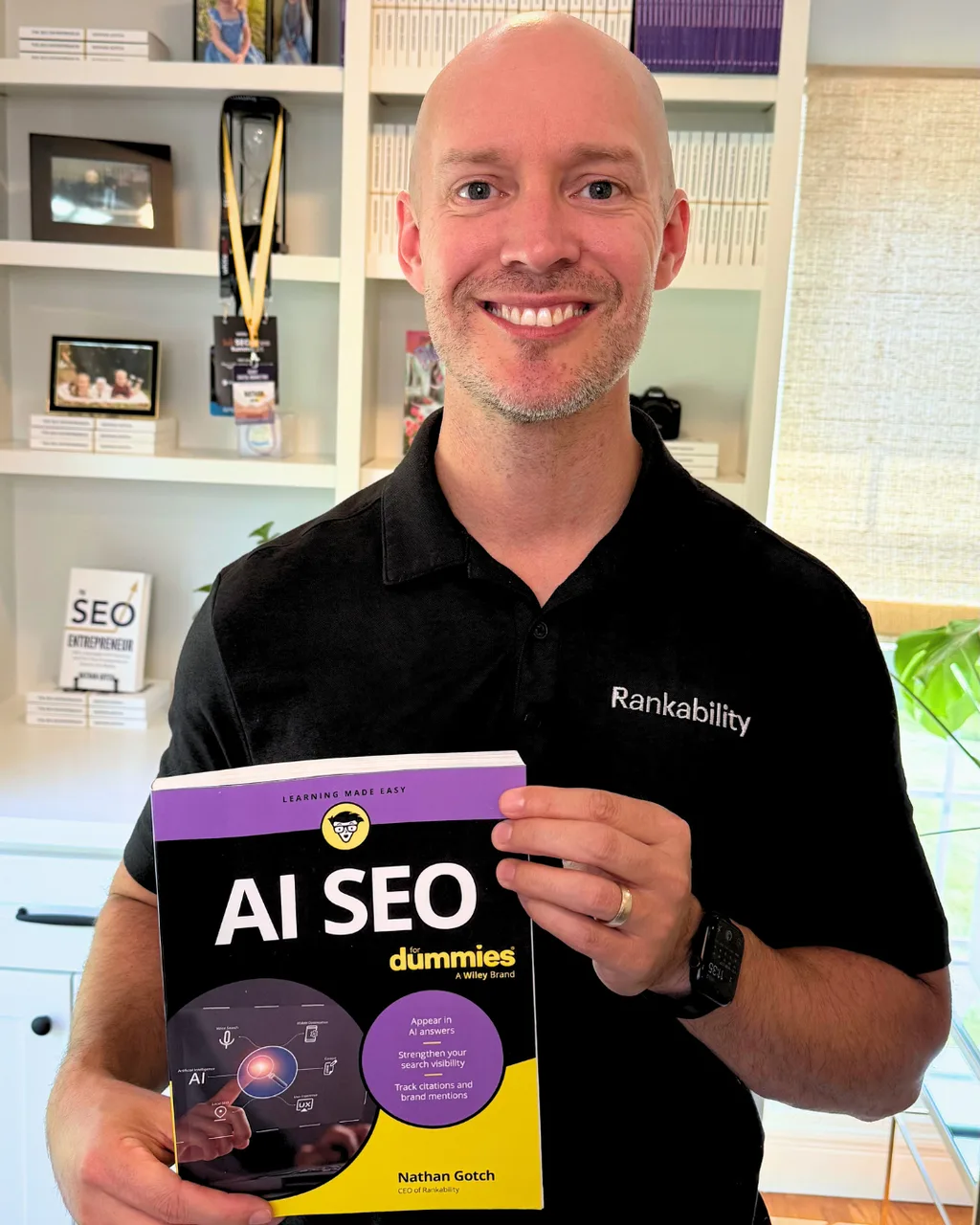
This book takes you from the very beginning of a campaign all the way through execution. The objective is to help you get more brand visibility across AI platforms and products like Google’s AI Overviews, Google AI Mode, ChatGPT, Claude, and Perplexity.
What you’re going to discover is that the process for driving visibility across these platforms has some similarities, but you still need to evaluate each platform separately.
Here are a few things you’re going to learn.
Control Your Brand Narrative
This is really important, and a lot of brands aren’t actively working on it. They’re missing a huge opportunity.
For example, Rankability has a help center where we publish content about our product. One of the reasons we do this is to give AI platforms a clear source of information about what Rankability does.
You don’t want AI relying on other websites to answer questions about your brand because you haven’t provided those answers yourself. When that happens, you’re leaving your brand narrative in someone else’s hands.
You can’t dictate every AI answer. But you can make sure your own information is clear, accurate, and available.
The bigger principle here is that when you’re thinking about getting better visibility in AI, you want to start at the bottom of the funnel.
Start with the questions people are asking about your brand. You want to answer every single one of those on your website, your source of truth.
For example, if someone asks, “Does Rankability have an MCP?” you want a clear answer on rankability.com. AI platforms with web search can retrieve information from your website, so give them the answers instead of leaving gaps for third-party websites to fill.
That’s why it’s so critical to focus heavily on branded queries and really attack all of them.
You can find some of these queries in Google Search Console. But if you have a brand-new website or a smaller brand, you might not see much activity. You might not see any measurable search volume at all.
That doesn’t mean those questions aren’t worth answering.
This is where first-party data comes in. Look at your customer service inquiries, testimonials, and the questions that keep coming up in conversations with customers. All of that is useful material.
You can’t chase search volume for these queries. You need to focus on what people actually need to know about your brand.
Another method is to look at your top competitors. What questions are people asking about them? Which of those questions would also apply to your brand?
Use that research to identify gaps, then create clear answers on your own website.
Strengthen Your Brand Entity
Once you’re working to control your brand narrative, the next piece is your brand entity.
Look at the information about your brand across the internet: your website, your social profiles, other assets you control, and third-party websites.
Is that information accurate? Does it clearly represent what you do?
If it doesn’t, you’re leaving AI to interpret inconsistent or outdated information and answer questions about your brand based on those inputs.
Our objective is to clean that up wherever we can. Make sure the information accurately represents your brand and gives AI the right raw material.
Understand Sentiment and Consensus
The next big piece is sentiment and consensus.
What’s the internet saying about your brand? What are your reviews saying? What’s showing up in user-generated content, blog posts, and editorial coverage?
It’s not just about what you say about yourself. It’s also about whether other sources support it.
Those sources can help AI platforms understand your reputation and evaluate whether your brand is a legitimate choice in your industry. You need to understand what that overall picture looks like, where it’s strong, and where it needs work.
That’s what AI SEO For Dummies walks you through: auditing your current situation, optimizing based on what you find, and continuing to work on your AI search visibility.
If you’re serious about getting more brand visibility in AI in 2026, I highly recommend reading this one.
Best for: Business owners, SEO professionals, and marketers who want a campaign process for AI search.
Keep in mind: This is my book, and I’m recommending it because it addresses the work I’ve described above. If your immediate problem is signing agency clients, the next book is a better place to start.
See AI SEO For Dummies on the official book page and the free companion toolkit.
2. The SEO Entrepreneur
When I started my SEO journey, I didn’t have a clear roadmap for turning my skills into a sustainable business.
That’s why I wrote The SEO Entrepreneur.
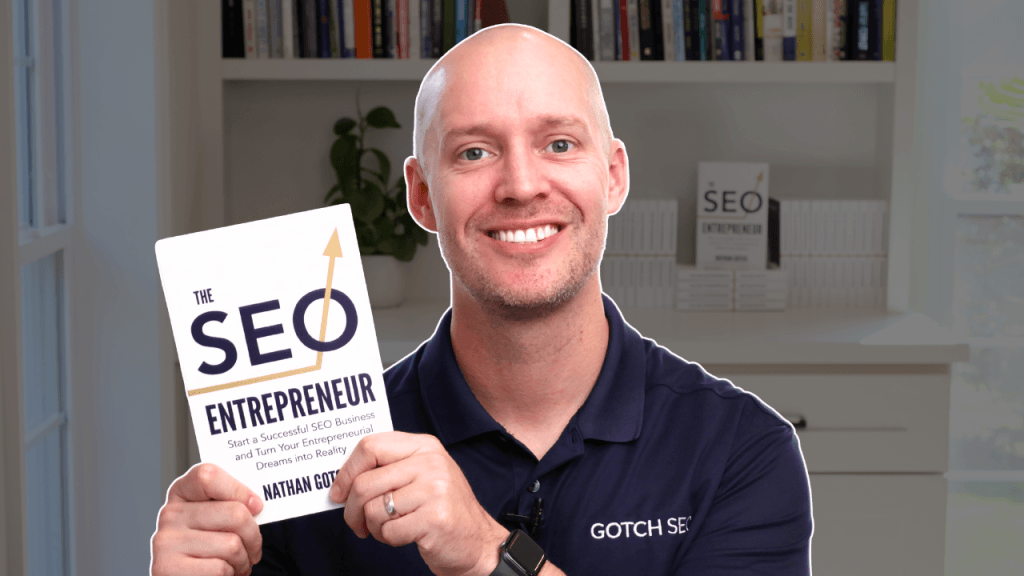
I poured more than a decade of experience into this book to help aspiring SEO professionals and entrepreneurs build their businesses.
Here’s what you’ll learn:
- How to get clients: Attract businesses that need your help and explain the value of your services.
- How to deliver: Build processes for managing SEO campaigns instead of figuring everything out from scratch.
- How to build a sustainable business: Develop client relationships and an operation you can continue improving.
Knowing SEO and running an SEO business are two different skills.
You can be great at finding technical issues or creating content and still struggle to sell your services, manage clients, or organize delivery.
My goal with this book is to help you connect those pieces.
Best for: Freelancers, aspiring agency owners, and SEO professionals who want to turn their skills into a business.
Keep in mind: If you need to learn how search engines work or how to research keywords, pair this with a fundamentals resource. The business advice becomes more useful when you can deliver the service you’re selling.
You can find it on Amazon and Google Play Books.
3. The Art of SEO
The Art of SEO kept showing up when I researched other SEO book lists.
And I understand why!
It was the thickest and most comprehensive book in my reading project. Here is my copy’s thickness relative to Think and Grow Rich:
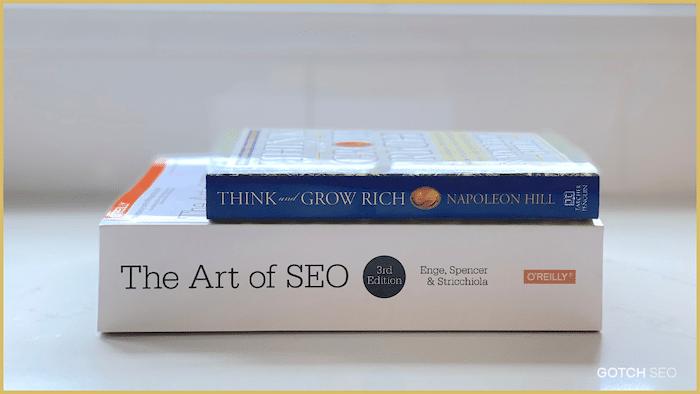
It’s so large that I was getting college flashbacks.
But overall, it’s an excellent reference for learning search engine optimization.
You’ll expand your knowledge of how search engines work, keyword research, SEO strategy, website structure, content, and local SEO.
It’s written by industry vets Eric Enge, Stephan Spencer, and Jessie Stricchiola.
Here are my biggest takeaways.
Take One Concept and Go Into the Rabbit Hole
Take the section on determining searcher intent.
Open up Google, conduct searches in the primary intent categories, and analyze what Google shows.
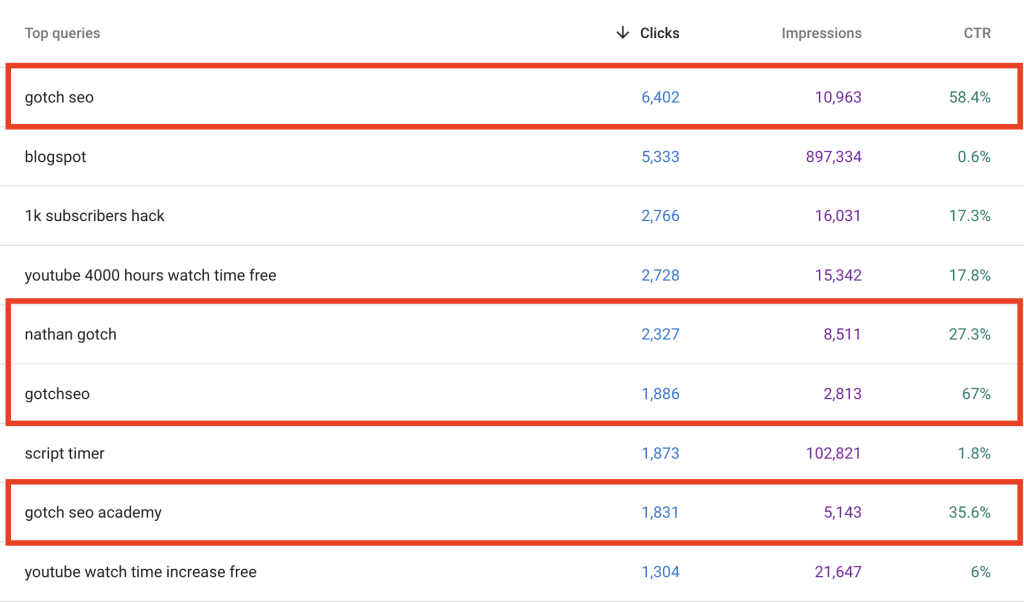
For a navigational query, search “Gotch SEO Academy.” Someone making that search already has a destination in mind.
In my original example, the branded query had roughly a 58% CTR:
Compare that with trying to attract clicks from people searching for another brand. In the example below, the CTR was much lower:
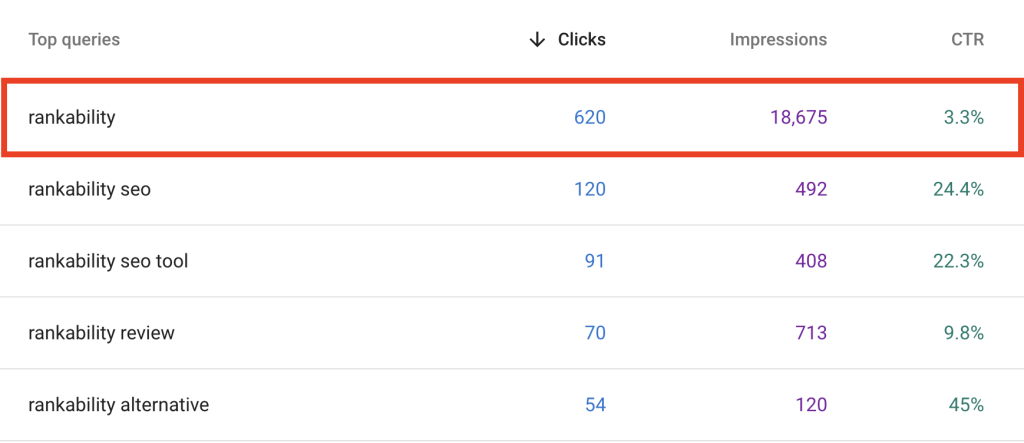
These are historical examples, not CTR benchmarks you should apply to every campaign. The point is to understand what the searcher wants.
For an informational query, search “how to build backlinks” or “how to dribble.”
For a commercial investigation query, search “Rankability review.” That person is evaluating an option before making a decision.
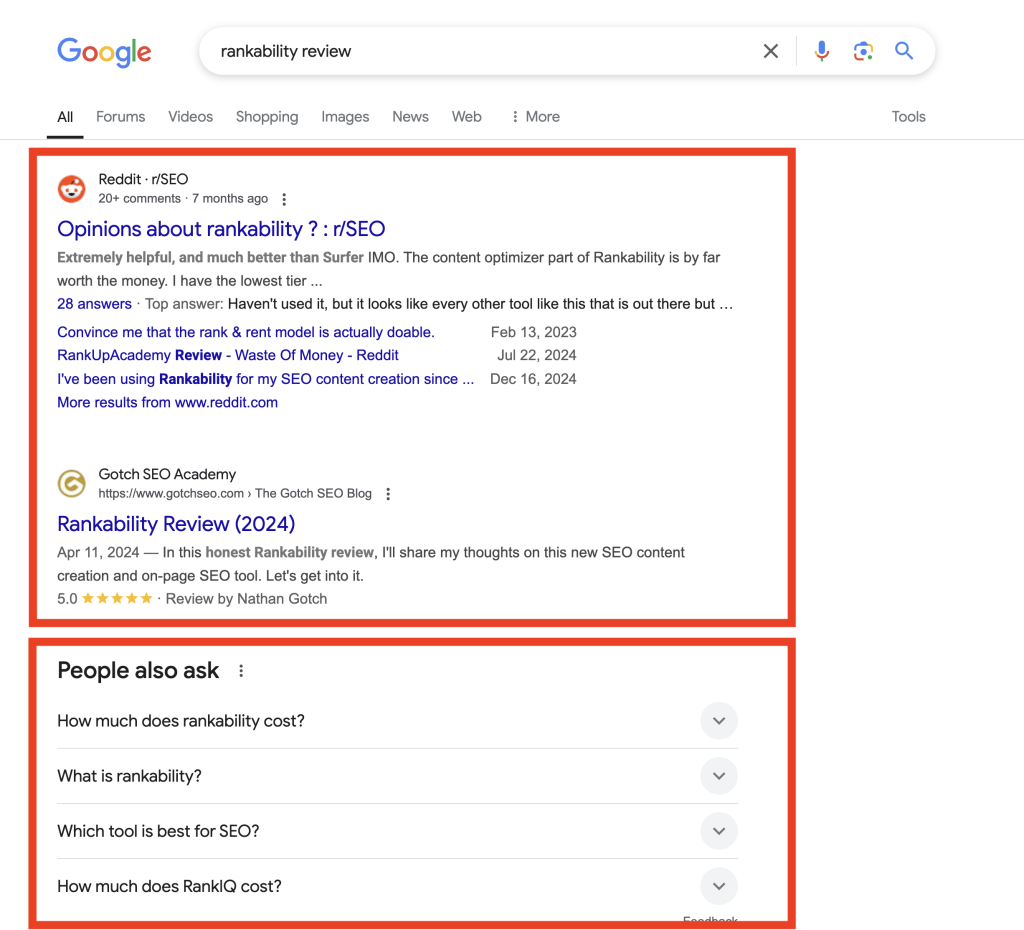
Notice how the results shift based on the intent.
There are few concepts more important in SEO. Study it, then build pages that help the searcher accomplish what they came to do.
Customize Every SEO Strategy
Many people push cookie-cutter SEO solutions to “scale” their agencies.
While this may help the agency, it doesn’t necessarily help the client.
Every campaign is different because of the competition, the website’s existing strengths, and any baggage it may have.
Yes, evergreen principles apply to every client. But the priorities should change based on what you find.
That’s why I recommend starting with an SEO audit. Figure out what needs work before you start handing out tasks.
Don’t Ignore Content Marketing
I loved the attention this book gave to content marketing and link building.
The useful principle is straightforward: create something worth referencing, then make sure the right people know it exists.
Original research, practical guides, and useful tools give you something to promote. That’s a much better starting point than asking people for links when you haven’t given them a reason to care.
Best for: Readers who want a substantial foundation and a reference they can return to as new problems come up.
Keep in mind: The size can be overwhelming if you’re brand new. Work through one topic at a time. My examples come from the edition I read; check the current edition and its contents before buying.
4. Ultimate Guide to Link Building
Ultimate Guide to Link Building by Garrett French and Eric Ward is much shorter than The Art of SEO, but it’s jam-packed with link building value.
Keep in mind:
This book focuses on link building. If you need help with keyword research or developing a broader SEO strategy, I’d start with The Art of SEO.
Here are a couple of key takeaways.
Know What Makes a Website Link-Worthy
People get so focused on acquiring backlinks that they forget to ask why anyone would link to the page in the first place.
What are you giving them?
A useful guide? Original data? A tool that solves a problem?
What you promote matters just as much as who you contact. If the page helps that website’s audience, you have a much stronger reason to start a conversation.
Qualify Your Link Opportunities
The geeky operational side of me loved how the book broke qualification into automated and manual checks.
You can use metrics to narrow a list. But you still need to look at the actual website.
Some questions worth asking:
- Is there a real connection between this website’s audience and the page I’m promoting?
- Does the site publish useful content, or does it mainly exist to place links?
- Is there a real person or organization behind it?
- Would I still want a mention here if I couldn’t see its authority score?
Metrics like DA or DR can help organize research. They don’t replace judgment. An old domain or a .edu link doesn’t automatically make a website a good opportunity.
That’s what I like about this book: it gets you thinking about the quality of the opportunity before you spend time pursuing it.
Best for: SEOs who want to build better linkable assets and be more thoughtful about outreach.
Keep in mind: Read older tools and tactics in the context of when the book was published. The principles are the reason I recommend it.
See Ultimate Guide to Link Building.
5. The SEO Blueprint
My SEO buddy Ryan Stewart published this one, and it’s a gem!
The SEO Blueprint stands out because it focuses on systemization. It’s geared toward agencies and people doing client SEO work.
Here are my key takeaways.
You Can Manage an Operation With Google Sheets
Both Ryan and I have love affairs with Google Sheets and Docs. And that’s because they’re awesome!
The useful lesson here is how to organize campaigns so people know what needs to happen, who owns it, and what comes next.
You don’t need a complicated system to start. You need one your team will actually use.
Rethink Your SEO Team Structure
You don’t have to bring every tactical role in-house.
There are contractors and vendors who can help with content, development, and other parts of delivery. That can give you access to skills you don’t need full-time.
But someone still needs to direct the campaign, review the work, and communicate with the client.
Outsourcing a task doesn’t remove your responsibility for the result.
This is a terrific book for seeing how Ryan systemizes campaigns, then deciding which parts fit your own operation.
Best for: Agency owners and SEO managers who need a more organized delivery process.
Keep in mind: Adapt the system to your clients and team. Don’t turn someone else’s process into the cookie-cutter approach we just talked about.
6. Product-Led SEO
Eli Schwartz’s Product-Led SEO gets you thinking about search as part of the product and business strategy.
One of my biggest takeaways was to focus on the searcher’s experience, then work out how SEO supports it.
It’s pretty hard to argue with that order of operations.
My favorite example is when people debate whether page loading speed is a ranking factor.
If a slow page is making life harder for your customers, you already have a reason to improve it.
This goes back to the earlier discussion on search intent. You have to understand what someone needs before you can build the right page for them.
Here’s an example from my own work.
We had a blog post targeting “iMovie review” that also appeared beyond position 50 for “imovie crashes when importing.”
A review wasn’t a good answer for someone trying to fix a crash.
So we created a dedicated page for that problem. In the original case, it reached position 1:
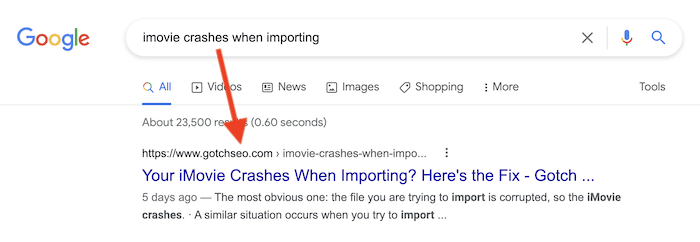
That’s a past result, not a claim about where the page ranks today. But the lesson still matters: solve the problem behind the query.
Best for: SEOs, founders, and product teams who want to connect organic search with how the business creates value.
Keep in mind: If you want a step-by-step technical audit checklist, choose a more tactical resource. I recommend this one for the way it makes you think about strategy.
7. The Executive SEO Playbook
Jessica Bowman’s The Executive SEO Playbook is a must-read for an in-house SEO trying to build support and get stuff done.
Getting buy-in can be challenging because SEO touches so many teams. Content, development, product, and leadership can all influence whether the work happens.
Jessica’s distinction between SEO Pacesetters and SEO Avoiders stuck with me.
Pacesetters make SEO part of how other teams work. Avoiders spend their time chasing projects and putting out fires because SEO was left out of the process.
It’s a critical concept.
SEO needs a place at the beginning of an important project. Otherwise, you’re trying to improve everything retroactively. Very tough!
This chart from my original review illustrates the challenge:
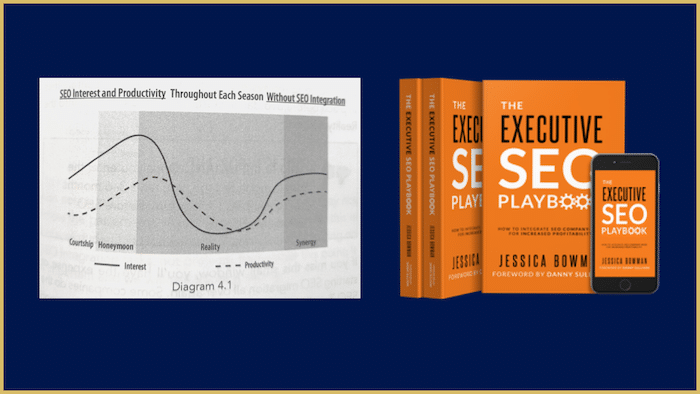
People get pumped about the prospects of growth. But things get interesting when planning turns into execution and several teams need to contribute.
If you’re struggling to get buy-in for good recommendations, this is the book I’d point you toward.
Best for: In-house SEOs and leaders who need to coordinate work across teams.
Keep in mind: This isn’t a beginner’s guide to keyword research or on-page optimization. Its value is helping you get the organization to act.
See The Executive SEO Playbook.
Why Other SEO Books Didn’t Make My List
Reading all those books helped me get clear on what makes a recommendation useful.
Here are the problems that kept coming up.
Too Much Theory, Not Enough Action
You can theorize all day, but getting SEO results requires doing the work.
A book can introduce an interesting concept and still leave you wondering what to do on Monday morning. I want it to help bridge that gap.
No Clear Priorities
Some books give you a laundry list of tasks without explaining which ones deserve your attention first.
That isn’t helpful when you have limited time and resources. I want to understand how to make the decision, not just collect more tasks.
Too Much Selling
There’s nothing wrong with selling. I’ve recommended two of my own books right here.
But the material needs to stand on its own. If every useful explanation stops at “hire me” or “buy my tool,” the reader isn’t getting what they came for.
Poor Writing
Some of the books were painful to read because of grammar, spelling, and readability problems.
SEO can be complicated enough. The writing should make it easier to understand.
Outdated Tactical Advice
An older book can still teach you a lot about strategy, communication, and how to think through a problem.
But tools, interfaces, and search features change. Don’t assume an old screenshot or a specific tactic still applies just because the broader principle is sound.
Which SEO Book Should You Read First?
If you’re a beginner: Start with the fundamentals in The Art of SEO. Pick one topic, work through it, and apply it to a website. Treat the book as a reference instead of an assignment you have to finish in one sitting.
If you already know SEO and want help with AI search: Start with AI SEO For Dummies. Work through your own brand’s questions, information, and reputation as you read.
If you’re building an agency: Start with The SEO Entrepreneur for the business side, then use The SEO Blueprint to think through delivery.
If you work in-house: Choose Product-Led SEO for strategy or The Executive SEO Playbook if getting the work approved and executed is your biggest challenge.
Frequently Asked Questions About SEO Books
Can You Learn SEO From a Book?
You can learn the concepts and processes. But you still need to apply them.
Reading about search intent is one thing. Looking at real results, deciding what a page needs, publishing it, and evaluating what happened is where you start developing judgment.
Are SEO Books Still Worth Reading in 2026?
Yes, if you choose the right book for the problem you’re trying to solve.
Use books for depth and structure. Use current documentation to check details that change. For example, Google’s guidance on AI features explains that foundational SEO best practices still apply to AI Overviews and AI Mode.
What’s the Difference Between AI SEO For Dummies and The SEO Entrepreneur?
AI SEO For Dummies focuses on improving brand visibility in AI-powered search. The SEO Entrepreneur focuses on building a business around your SEO skills.
Choose based on the job you need to do next.
What Are the Best Books on AEO and GEO?
For a beginner-friendly, step-by-step plan that covers both, start with AI SEO For Dummies (I wrote it). For a dedicated AEO deep dive, read Rodrigo Stockebrand’s Answer Engine Optimization. For a dedicated GEO book, read Ross Hudgens’ Generative Engine Optimization. The best AEO books and best GEO books guides compare them in detail.
Read One Book. Apply One Lesson.
I’ve read hundreds of books, but buying another one won’t do the work for you.
Pick the book that addresses your biggest problem. Read a section. Apply what you learned. Then look at what happened.
That’s how I’d use this list.
And if your priority is getting your brand found in AI search, start with AI SEO For Dummies.